
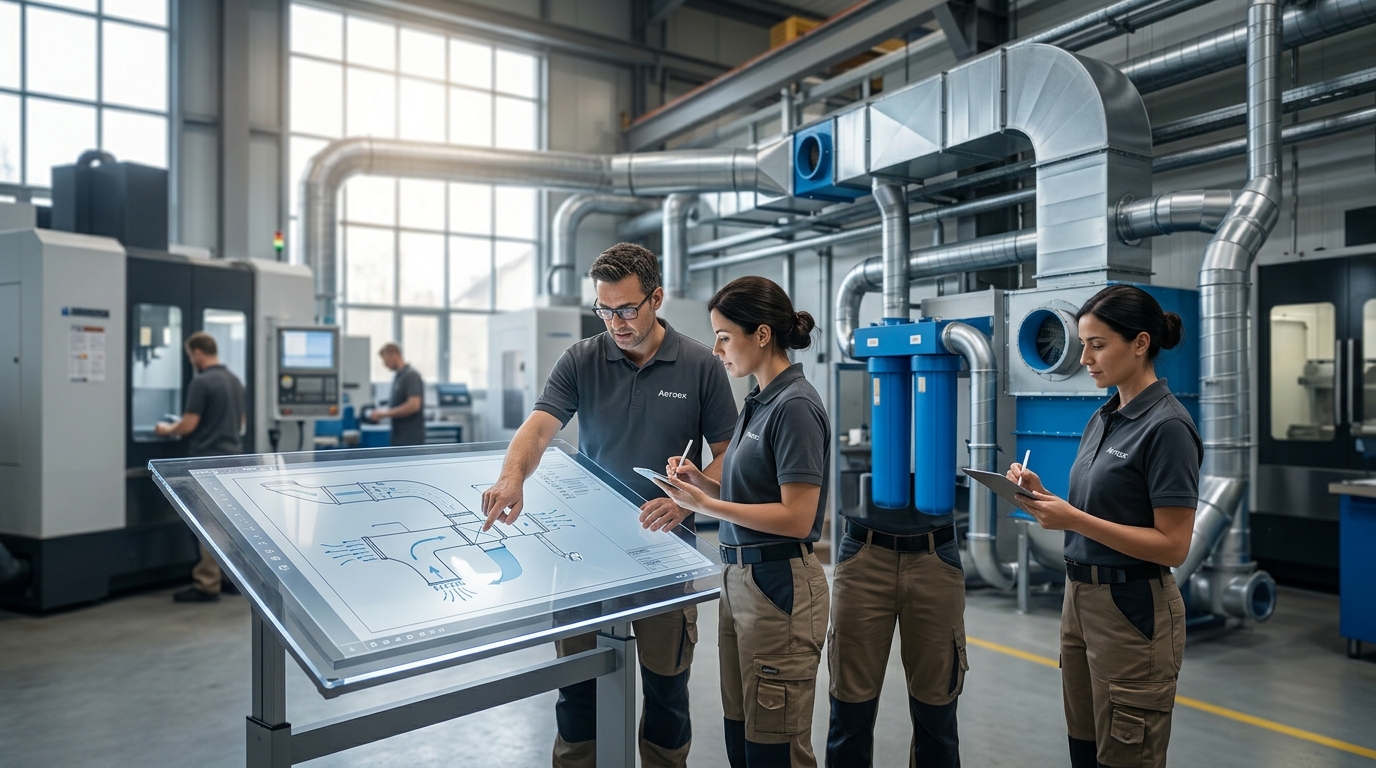
Engineers design custom air filtration systems by mapping specific process contaminants to multi-stage capture strategies. Aeroex engineers evaluate machine configurations, airflow dynamics, and environmental conditions to build tailored solutions. This approach ensures that complex industrial challenges, from soil remediation to molecular filtration, are addressed with precision and reliability.
Application Assessment and Containment Strategy
The design process begins with a detailed audit of the industrial environment. An application assessment is the systematic evaluation of a facility's specific air quality challenges and operational constraints. Engineers identify the exact nature of the contaminants, whether they are oil mist, coolant vapor, or toxic fumes from specialized processes like soil remediation. This initial phase determines the necessary airflow volume and the physical layout of the capture points.
For example, in a soil remediation system, the process involves heating contaminated soil to vaporize harmful substances. Aeroex engineers design a specialized air filtration solution to capture and filter these toxic fumes safely. By containing the vapors at the source, the system protects the environment and allows the larger remediation process to operate effectively. This level of customization is critical for applications where standard off-the-shelf units cannot handle the specific chemical or thermal loads.
Multi-Stage Filtration Architecture
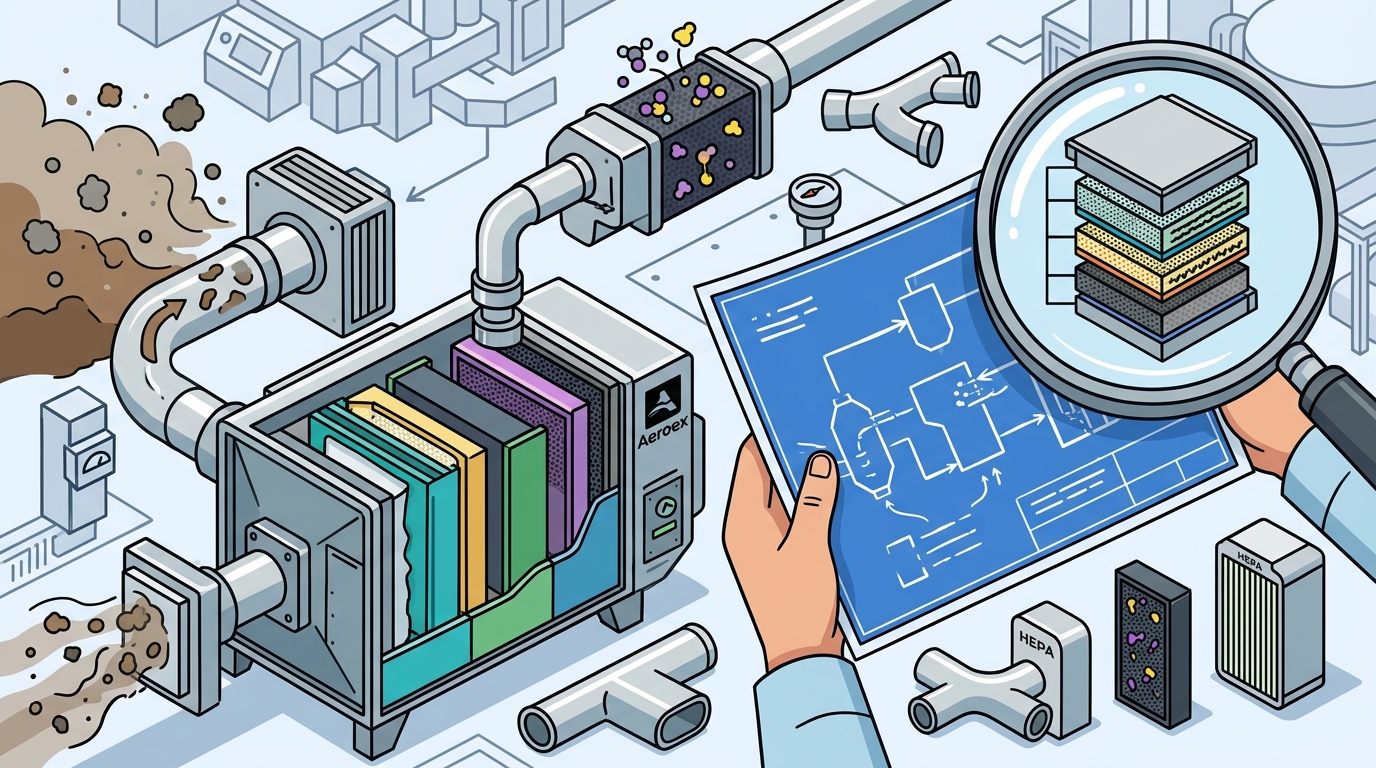
Once the containment strategy is defined, engineers select the appropriate filtration stages. Multi-stage filtration is a sequential process that uses different filter media to capture contaminants of varying sizes and chemical properties. The system typically begins with a pre-filter to remove large particles, followed by a depth-loading coalescer to capture bulk liquid droplets. A final HEPA stage then targets the submicron fraction, ensuring that the exhaust air meets rigorous quality standards.
In environments requiring molecular filtration, Aeroex systems utilize carbon filters to capture harmful gases and volatile organic compounds (VOCs). These carbon-based filters adsorb molecules at the molecular level, which is ideal for removing chemical pollutants from the air. For instance, in odor control applications, the carbon stage neutralizes airborne chemical compounds responsible for unpleasant smells. This layered approach ensures that the system can handle a wide range of contaminants, from fine mist to complex chemical vapors, within a single engineered unit.
Material Selection for Corrosive Environments
The physical construction of the filtration system is just as important as the filter media. Material selection is the process of choosing housing and component materials that can withstand the specific environmental conditions of the facility. In food and beverage manufacturing or chemical processing, standard steel may corrode rapidly. Aeroex engineers often specify stainless steel or coated steel components to ensure long-term durability and sanitary performance.
For washdown environments or areas with high humidity, the system must be designed to resist moisture and chemical exposure. Stainless steel construction is commonly used in these settings to maintain a clean and safe workspace. By selecting the right materials, engineers ensure that the filtration system remains effective and safe over its entire service life. This attention to material science is a key differentiator in specialized industrial applications where environmental conditions are demanding.
System Integration and Operational Efficiency
The final phase of the design process involves integrating the filtration system into the existing facility layout. System integration is the process of ensuring that the new air filtration unit works seamlessly with the plant's infrastructure and operational workflow. Engineers consider factors such as noise levels, maintenance access, and the ease of filter replacement. The goal is to create a solution that requires minimal downtime and provides a seamless user experience for the facility's staff.
Aeroex is committed to delivering products that meet the highest standards of excellence and reliability. The company's core values, including quality, responsiveness, and innovation, guide every design decision. By working closely with clients, Aeroex ensures that the final system not only meets technical specifications but also aligns with the broader goals of the facility. This collaborative approach results in a tailored solution that enhances operational efficiency and supports a healthier work environment.
Key Takeaways
- Application assessment is the first step in designing a custom air filtration system, focusing on specific contaminants and airflow needs.
- Multi-stage filtration uses a combination of pre-filters, coalescers, and HEPA or carbon stages to capture a wide range of pollutants.
- Material selection, such as stainless steel, is critical for ensuring durability in corrosive or washdown environments.
- System integration ensures that the filtration unit fits seamlessly into the facility's layout and operational workflow.
- Aeroex engineers provide tailored solutions for complex applications, including soil remediation and molecular filtration.
- The design process is guided by core values of quality, innovation, and customer experience to ensure long-term reliability.
Frequently Asked Questions
What is the first step in designing a custom air filtration system?
The first step is an application assessment, where engineers evaluate the specific contaminants, airflow requirements, and environmental conditions of the facility.
How does multi-stage filtration work in industrial settings?
Multi-stage filtration uses a sequence of filters, such as pre-filters, coalescers, and HEPA or carbon stages, to capture contaminants of different sizes and chemical properties.
Why is material selection important for air filtration systems?
Material selection ensures that the system can withstand the specific environmental conditions, such as corrosion or high humidity, ensuring long-term durability and performance.
Can Aeroex design systems for soil remediation?
Yes, Aeroex engineers have designed specialized air filtration solutions for soil remediation systems to capture and filter toxic fumes released during the heating process.
What types of contaminants can carbon filters remove?
Carbon filters are used for molecular filtration to capture harmful gases, volatile organic compounds (VOCs), and odors by adsorbing molecules at the molecular level.
How does Aeroex ensure system integration is successful?
Aeroex works closely with clients to ensure the system fits the facility's layout, minimizes downtime, and aligns with operational goals, guided by their core values of quality and responsiveness.