
How Cartridge Collectors Work in Custom Industrial Air Filtration
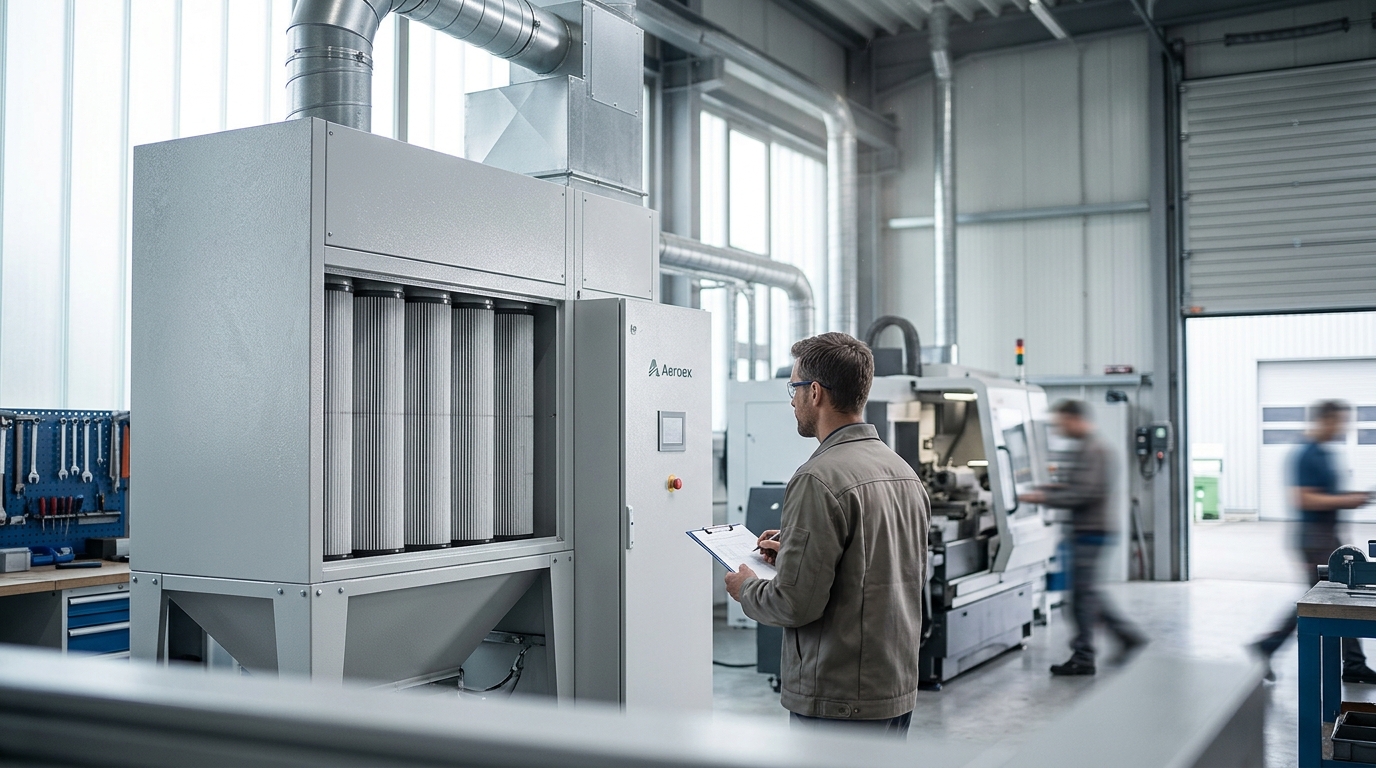
Cartridge collectors are filtration systems that use pleated filter elements to capture airborne contaminants from industrial processes. In custom industrial air filtration, these systems are engineered to handle specific mist, smoke, or vapor loads by directing airflow through a series of cartridges. This design allows for high surface area filtration in a compact footprint, making them ideal for complex manufacturing environments where space and precision matter.
The Mechanics of Cartridge Filtration
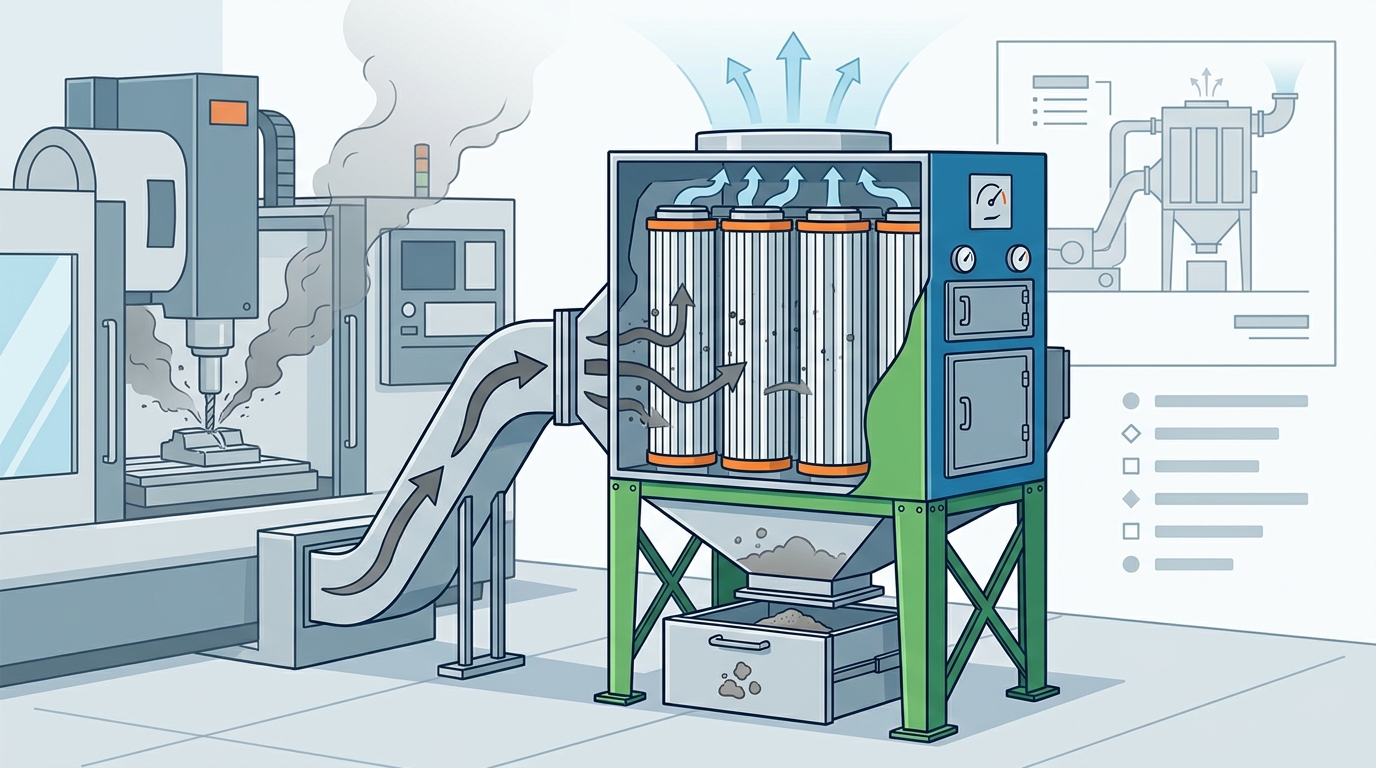
At the core of a cartridge collector is the filter element itself. A cartridge filter is a cylindrical, pleated media component that maximizes the surface area available for particle capture. As contaminated air is drawn into the system, it passes through the pleats of the cartridge. The media traps solid particles, liquid droplets, and fine mists based on size and charge. This physical barrier prevents contaminants from exiting the system and returning to the workspace.
The pleated design is critical for efficiency. By increasing the surface area, the system can handle higher airflow volumes without a proportional increase in pressure drop. This means the blower motor does not have to work as hard to maintain the necessary suction. In custom applications, engineers select the specific media type, such as HEPA or activated carbon, to target particular contaminants like oil mist or volatile organic compounds.
Integration into Custom Engineered Systems
Custom industrial air filtration systems are not one-size-fits-all. They are tailored to the specific geometry and process requirements of a facility. In these systems, cartridge collectors are often integrated into modular housings that can be configured for single or multiple units. This modularity allows for scalability. If a production line expands, additional cartridge modules can be added to the existing system without a complete redesign.
Aeroex utilizes this modular approach in its ARO-X platform. The ARO-X is a scalable filtration platform designed for process air problems that standard units cannot handle. It captures mist, smoke, fume, VOCs, and corrosive gases in a single engineered system. The use of multi-stage filtration, including cartridge elements, ensures that the air is cleaned to the required standard before being exhausted or recirculated. This integration is crucial for facilities with unique operating conditions, such as those involving high-temperature vapors or aggressive chemical byproducts.
Managing Pressure Drop and Maintenance
As cartridges capture contaminants, they become loaded with material. This loading increases the resistance to airflow, known as pressure drop. In a custom system, monitoring this pressure drop is essential for maintaining performance. When the pressure drop reaches a predetermined threshold, it indicates that the cartridges need to be cleaned or replaced. Ignoring this signal can lead to reduced airflow, which compromises the capture of contaminants at the source.
Maintenance in custom systems is often designed to be accessible and efficient. Cartridge collectors typically feature quick-release mechanisms that allow technicians to swap out elements without extensive disassembly. This reduces downtime and ensures that the filtration system remains operational. For facilities with strict production schedules, the ability to perform rapid cartridge changes is a significant operational advantage. It ensures that air quality standards are maintained without interrupting the manufacturing process.
Applications in Demanding Industrial Environments
Cartridge collectors are particularly effective in environments where the contaminant profile is complex. For example, in metalworking operations, the system must handle both coarse oil mist and fine submicron particles. A custom system might use a pre-filter stage to capture the bulk of the liquid, followed by a cartridge stage with high-efficiency media to capture the fine fraction. This multi-stage approach protects the final filter and extends its service life.
In other industries, such as chemical processing or food production, the focus may be on odor control or vapor capture. Here, cartridge collectors are often paired with activated carbon media. The carbon adsorbs the molecular contaminants, neutralizing odors and removing harmful vapors. The ability to customize the cartridge media allows engineers to address the specific air quality challenges of each facility. This flexibility is what distinguishes a custom engineered system from a standard off-the-shelf unit.
Key Takeaways
- Cartridge collectors use pleated media to maximize surface area for efficient particle and mist capture.
- Custom systems integrate cartridge modules into scalable housings to meet specific facility requirements.
- Monitoring pressure drop is critical for determining when cartridges need maintenance or replacement.
- Multi-stage filtration using cartridges protects final filters and extends system life.
- Activated carbon cartridges can be used to address odor and vapor control in custom applications.
- Modular design allows for easy expansion as production needs change.
Frequently Asked Questions
What is the primary function of a cartridge in an air filtration system?
The primary function of a cartridge is to act as a physical barrier that captures airborne contaminants. It uses pleated media to trap particles, mist, and fumes as air passes through, ensuring that the exhausted air is clean.
How do cartridge collectors differ from baghouse collectors?
Cartridge collectors use cylindrical, pleated elements, while baghouse collectors use fabric bags. Cartridges generally offer a higher surface area in a smaller footprint and are easier to clean or replace, making them suitable for compact custom systems.
Can cartridge collectors handle liquid mist?
Yes, cartridge collectors can handle liquid mist, especially when configured with appropriate pre-filters or coalescing stages. The multi-stage design ensures that bulk liquid is removed before it reaches the fine cartridge media.
How often do cartridges need to be replaced?
Replacement frequency depends on the contaminant load and the type of media used. In custom systems, pressure drop sensors often indicate when replacement is needed, which can range from a few months to several years.
Are cartridge collectors suitable for high-temperature applications?
Yes, custom systems can be engineered with heat-resistant cartridge media to handle high-temperature exhaust streams. The specific temperature rating of the media must match the process conditions.
Conclusion
Cartridge collectors are a vital component in custom industrial air filtration systems. Their ability to provide high-efficiency filtration in a compact, modular format makes them ideal for complex manufacturing environments. By understanding the mechanics of cartridge filtration and how it integrates into engineered systems, facility managers can make informed decisions about their air quality solutions. For facilities with unique air quality challenges, consulting with an engineering team to design a custom system is the best path to ensuring a safe and healthy work environment. To discuss your specific filtration needs, contact Aeroex for a tailored recommendation. Learn more: Contact Aeroex Emission Control.