
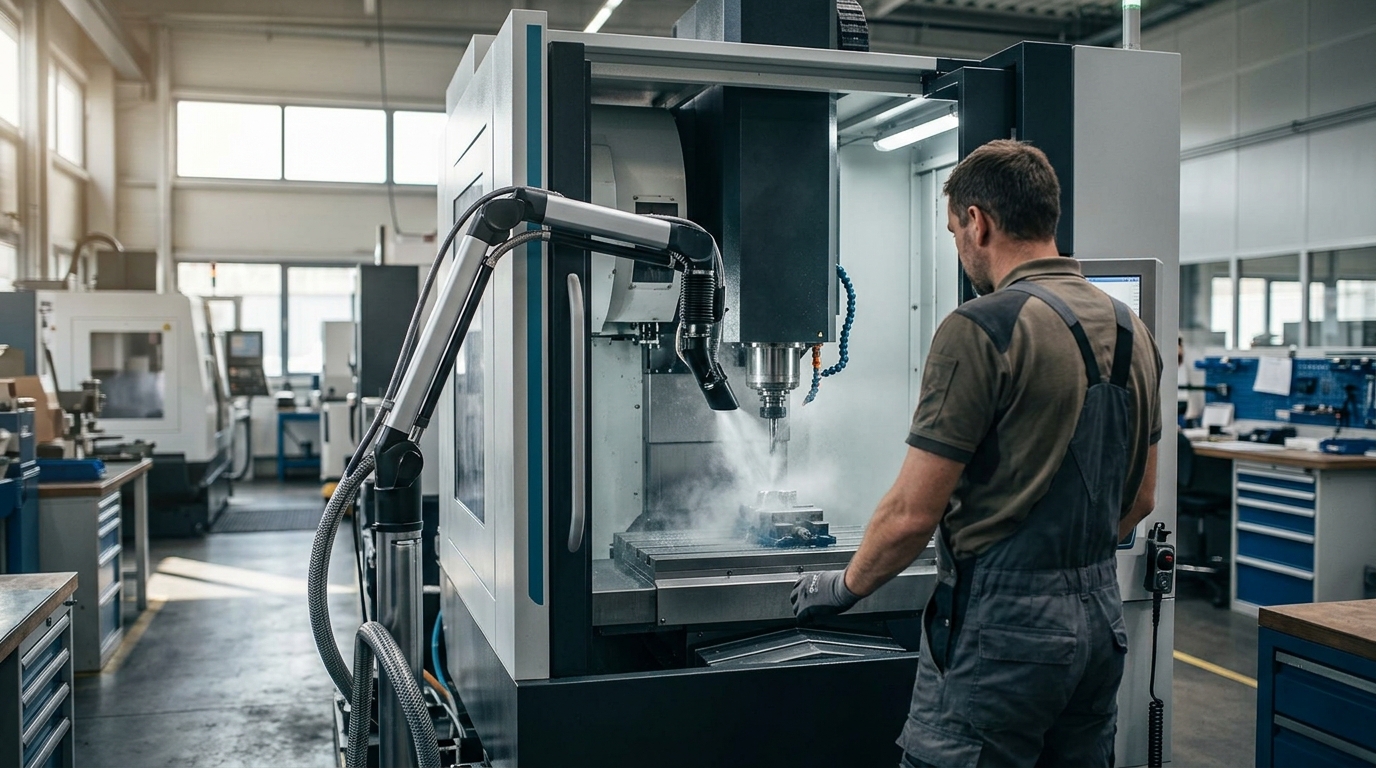
Source capture is the practice of extracting airborne contaminants directly at the point of generation rather than relying on room-level ventilation. In industrial settings, this approach prevents oil mist, coolant aerosols, and process fumes from dispersing into the general workspace. By intercepting these particles at the machine level, facilities maintain cleaner air, protect equipment integrity, and reduce operator exposure to harmful substances. This method is the foundation of effective industrial air quality management.
Defining Source Capture and Its Industrial Role
Source capture is a localized air extraction strategy that targets specific emission points within a production environment. It differs from dilution ventilation, which mixes contaminants with large volumes of fresh air, by physically removing the pollutant before it escapes the immediate work zone. In metalworking and machining, this is critical because high-speed operations generate fine particulates that are difficult to capture once they become airborne. The primary goal is to maintain a controlled airflow pattern that pulls contaminants into a filtration system immediately.
The Physics of Containment
Effective source capture relies on creating a negative pressure zone at the capture point. This requires precise calculation of airflow velocity and volume to overcome the momentum of the generated mist or fume. If the capture velocity is too low, contaminants will drift away from the intake. If it is too high, it may create turbulence that disrupts the machining process or draws in unwanted air. Balancing these factors ensures that the system captures the target contaminant efficiently without wasting energy.
CNC Machining and Mist Collection
CNC machining is one of the most common applications for source capture due to the consistent generation of oil and coolant mist. When cutting tools interact with metal at high speeds, friction generates heat that vaporizes the lubricant, creating a fine aerosol. This mist can settle on surfaces, reduce visibility, and degrade air quality. A dedicated mist collector mounted directly on the machine enclosure is the standard solution for this challenge. It pulls the contaminated air from inside the machine, separates the liquid from the air, and returns clean air to the shop.
Direct-Mount Advantages
Direct-mount systems, such as the Mist-Fit, are designed for compact machine layouts where floor space is limited. By attaching the collector directly to the machine, the system minimizes the length of the ductwork required. This reduces pressure drop and ensures that the maximum airflow is available at the capture point. This configuration is particularly effective for individual CNC machines in dense shop environments where routing large ducts is impractical.
Fume Extraction and Process Contaminants
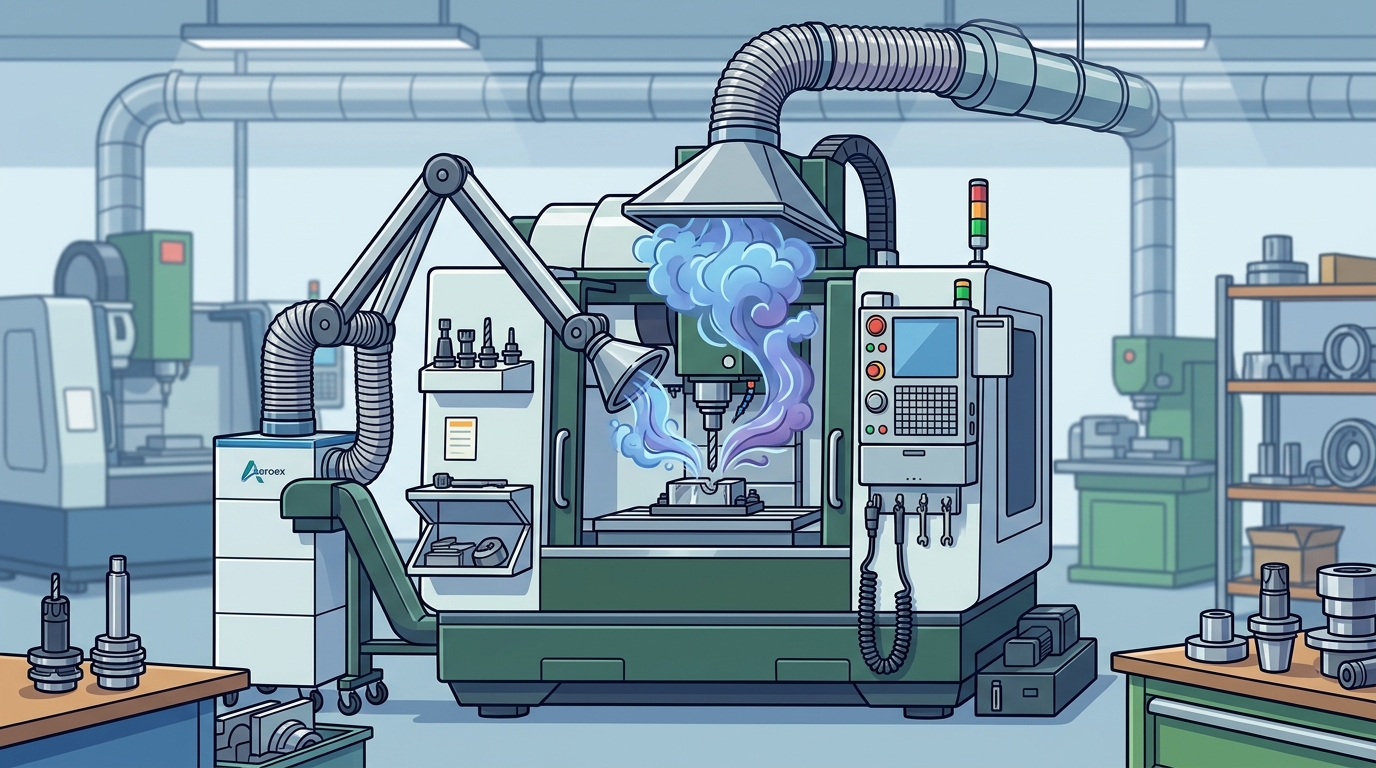
Beyond liquid mist, many industrial processes generate gaseous fumes and vapors. Welding, heat treating, and chemical processing can release smoke and volatile organic compounds that pose health risks. Source capture for these applications requires filtration media capable of trapping sub-micron particles and adsorbing chemical gases. A multi-stage filtration approach is often necessary, combining mechanical filters for particulate matter with activated carbon for odor and gas control. This ensures that the air exhausted back into the facility is safe for operators to breathe.
Multi-Stage Filtration Logic
For complex fume profiles, a single filter type is rarely sufficient. A pre-filter captures large droplets and debris, protecting the finer stages from clogging. A depth-loading coalescer then captures the bulk of the liquid mist. Finally, a high-efficiency filter, such as a HEPA unit, removes the remaining sub-micron particles. This layered approach extends filter life and maintains consistent airflow over time. The ARO-X platform is designed to handle these complex, multi-stage requirements for higher-demand applications.
Selecting the Right Capture System
Choosing the appropriate source capture system depends on several operational factors. The type of machine, the specific coolant or oil used, and the volume of contaminants generated all influence the design. A system that works well for a small lathe may be insufficient for a large milling center. Additionally, the layout of the shop floor determines whether a direct-mount unit or a centralized system with ductwork is more practical. Evaluating these variables ensures that the investment in air quality yields the desired results.
Key Selection Criteria
- Airflow Requirements: The system must move enough air to capture the contaminant at the source. This is measured in CFM (cubic feet per minute) and must match the machine's emission rate.
- Mounting Constraints: Space limitations may dictate a compact, direct-mount design. Larger facilities might prefer floor-standing units with ducting.
- Maintenance Access: Filters must be easily accessible for replacement. Systems with quick-change mechanisms reduce downtime and labor costs.
- Contaminant Type: Oil mist requires coalescing filters, while fumes may require carbon stages. Matching the filter media to the contaminant is essential for performance.
Key Takeaways
- Source capture extracts contaminants at the point of generation, preventing them from dispersing into the general workspace.
- CNC machining generates fine oil and coolant mist that requires dedicated, machine-level filtration for effective control.
- Direct-mount collectors minimize ductwork and are ideal for compact machine layouts with limited floor space.
- Multi-stage filtration is necessary for processes that generate both particulate matter and gaseous fumes.
- System selection should be based on airflow requirements, mounting constraints, and the specific type of contaminant.
- Proper source capture improves operator health, protects equipment, and maintains a cleaner working environment.
Frequently Asked Questions
What is the difference between source capture and room ventilation?
Source capture removes contaminants directly at the machine level using localized extraction. Room ventilation relies on diluting contaminants with fresh air throughout the entire facility. Source capture is more efficient and effective for controlling specific process emissions.
Can a mist collector handle both oil mist and fumes?
How do I determine the required airflow for my machine?
The required airflow depends on the size of the machine, the type of operation, and the volume of mist generated. Manufacturers often provide recommended CFM values for their equipment. Consulting with an air quality specialist can help calculate the precise airflow needed for effective capture.
Is direct-mount installation always the best option?
Direct-mount installation is ideal for compact spaces and individual machines. However, for larger facilities with multiple machines, a centralized system with ductwork may be more efficient. The best option depends on the shop layout and the number of machines requiring capture.
How often should filters be replaced in a source capture system?
Filter replacement frequency depends on the contaminant load and the type of filter. Pre-filters may need cleaning or replacement more often, while final filters last longer. Monitoring filter pressure drop is the most reliable way to determine when a replacement is needed.
Conclusion
Implementing source capture is a critical step toward maintaining a safe and efficient industrial environment. By addressing contaminants at their origin, facilities can significantly improve air quality and protect their workforce. Whether you are dealing with CNC mist or complex process fumes, selecting the right system requires a careful evaluation of your specific operational needs. Contact Aeroex to discuss your air quality challenges and find a tailored solution for your facility.