
How Electrostatic Precipitators Work in Industrial Air Filtration
Electrostatic precipitators (ESPs) capture airborne particles by charging them with high-voltage electrodes and collecting them on grounded plates. This method is highly effective for fine particulates in heavy industrial processes. While Aeroex specializes in mechanical filtration for mist and fumes, understanding ESPs helps facility managers evaluate the right technology for their specific emission profile.
The Physics of Electrostatic Capture
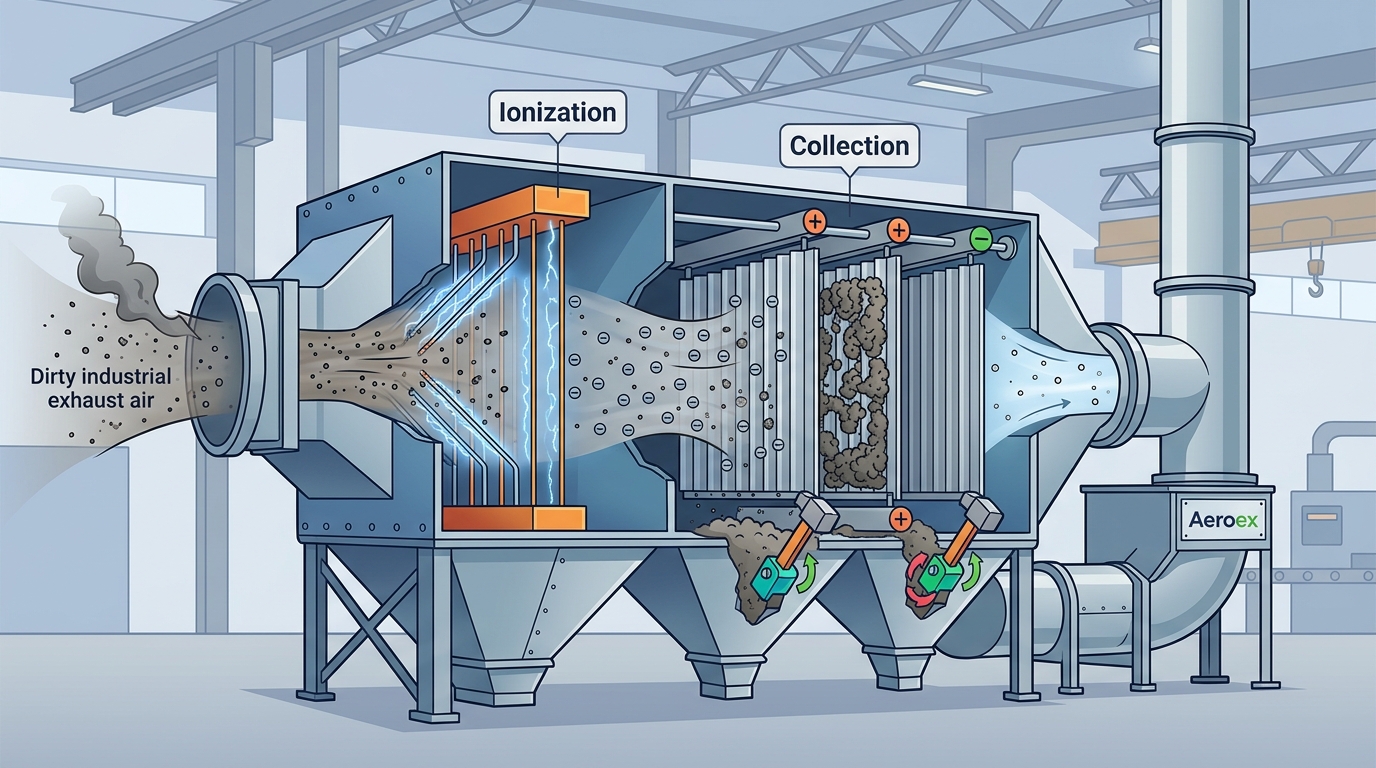
An electrostatic precipitator is a device that uses electrostatic forces to remove particulate matter from a gas stream. The process begins when contaminated air passes through a series of charged discharge electrodes. These electrodes create a strong electric field that ionizes the air molecules. As particles pass through this field, they acquire an electrical charge. Once charged, the particles are attracted to and collected on grounded collector plates. This physical separation allows the cleaned air to exit the system while the captured particulates remain on the plates.
The efficiency of this process depends heavily on the particle size and the electrical properties of the gas. Fine particles, such as those generated in welding or certain chemical processes, are often captured more effectively by ESPs than by standard mechanical filters. However, the system requires a significant amount of electrical power to maintain the high-voltage field. For facilities looking to understand the broader landscape of industrial air purification, reviewing the engineered solutions available can provide context on how different technologies address specific contaminants.
ESPs vs. Mechanical Filtration
For a machine shop dealing with coolant mist, a mechanical system is usually the preferred choice. The metalworking mist collectors from Aeroex are designed specifically to handle the liquid-laden air found in these environments. While an ESP might capture some fine smoke, it is not the standard solution for oil mist collection. Understanding this distinction helps prevent the wrong technology from being selected for a specific application.
Maintenance and Operational Considerations
Operating an electrostatic precipitator requires a different maintenance approach than mechanical filtration. The collector plates in an ESP must be periodically cleaned to remove the accumulated particulate layer. This is often done through a rapping mechanism that vibrates the plates, causing the dust to fall into a hopper below. If the plates are not cleaned regularly, the buildup can reduce the electrical efficiency of the unit. Additionally, the high-voltage components require specialized safety protocols during inspection.
Mechanical filtration systems, on the other hand, typically involve replacing or cleaning filter media. For example, the Mist-Fit series uses replaceable filters that are designed for easy service. This simplicity can be a significant advantage for facilities with limited maintenance staff. The choice between an ESP and a mechanical filter often comes down to the type of contaminant and the operational constraints of the facility.
When to Consider Electrostatic Precipitators
Electrostatic precipitators are most commonly used in large-scale industrial applications where high volumes of dry particulate matter are generated. Examples include cement kilns, power plants, and certain chemical manufacturing processes. In these environments, the volume of air and the nature of the dust make mechanical filtration less practical or more expensive to operate. The ESP can handle the high airflow rates required by these massive systems.
For smaller industrial facilities, such as machine shops or food processing plants, mechanical filtration is often the more appropriate choice. Aeroex provides specialty applications solutions that are tailored to specific industrial needs. If your facility is dealing with a unique combination of contaminants, it is important to consult with an engineering team to determine the best approach. The right system depends on the specific characteristics of the air stream and the regulatory requirements of the region.
Key Takeaways
- Electrostatic precipitators use high-voltage electrodes to charge and capture dry particulate matter.
- Mechanical filtration is generally preferred for liquid mist and oil droplets in machine shops.
- ESPs require specialized maintenance for high-voltage components and plate cleaning.
- The choice between ESP and mechanical filtration depends on the type of contaminant.
- Aeroex specializes in mechanical filtration solutions for industrial mist and fumes.
- Consulting with an engineering expert ensures the right technology is selected for your facility.
Frequently Asked Questions
What is the main difference between an ESP and a mechanical filter?
The main difference is the capture mechanism. ESPs use electrical forces to charge and collect particles, while mechanical filters use physical barriers to trap them.
Can an electrostatic precipitator handle oil mist?
ESPs are generally not the best choice for oil mist. Mechanical filtration systems are specifically designed to handle liquid droplets and are more effective for this type of contaminant.
How often do ESP plates need to be cleaned?
The frequency of cleaning depends on the dust load and the design of the unit. In many cases, the plates are cleaned automatically by a rapping mechanism, but the collected dust must be removed from the hopper regularly.
Is Aeroex an electrostatic precipitator manufacturer?
No, Aeroex specializes in mechanical filtration systems for industrial air purification. Their products are designed for mist, fume, and particulate collection using filter-based technology.
What types of industries use electrostatic precipitators?
Industries that generate large volumes of dry particulate matter, such as cement, power generation, and chemical manufacturing, commonly use ESPs.