
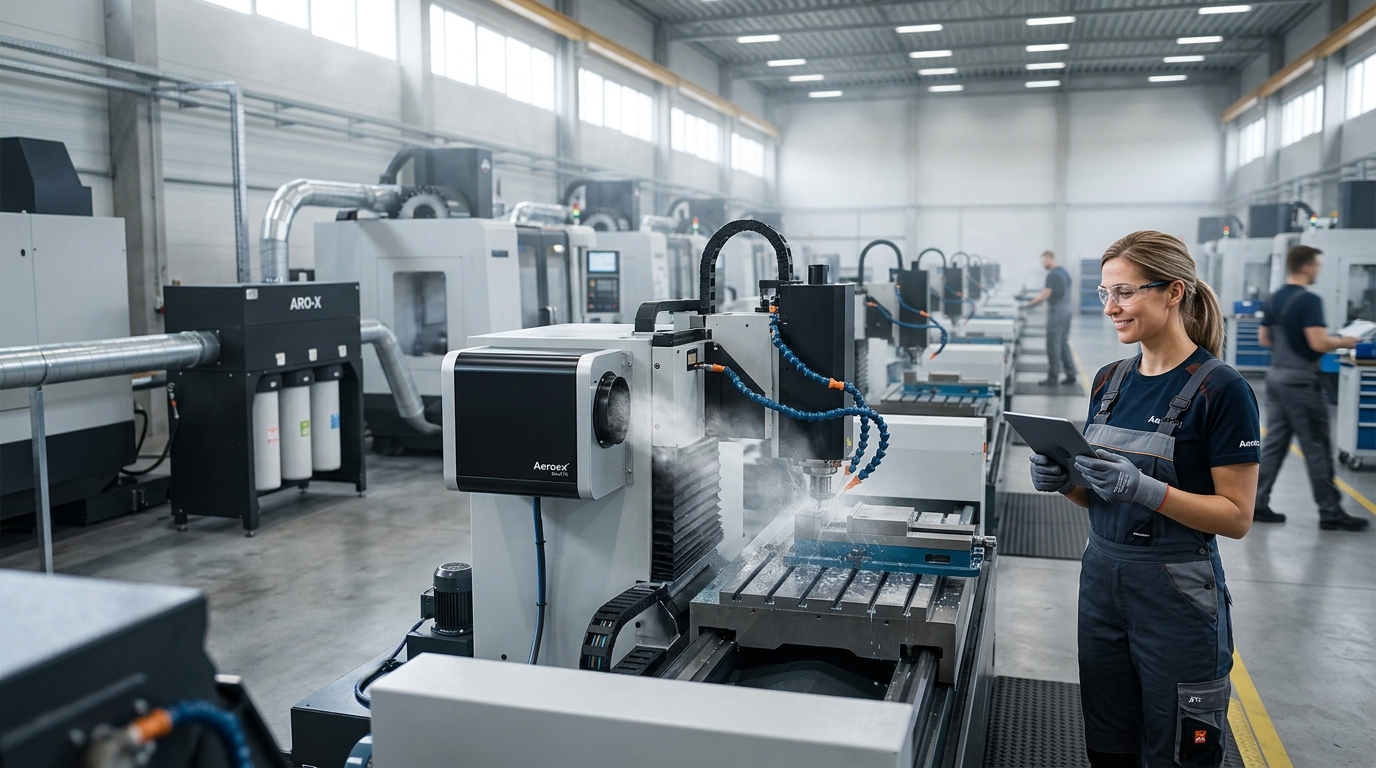
Choosing the right industrial air filtration system is critical for maintaining a safe and healthy manufacturing environment. Aeroex provides specialized solutions designed to capture contaminants at the source, ensuring cleaner air for workers. This guide covers the top filtration technologies, including mist collectors, HEPA systems, and wet scrubbers, to help you select the best fit for your facility. For additional details, review the .
HEPA Filtration
High-Efficiency Particulate Air (HEPA) filtration is a standard for removing fine particulates from industrial air streams. A HEPA filter is a dense mat of fibers that captures particles as small as 0.3 microns with high efficiency. In factory settings, this technology is essential for controlling airborne dust, fumes, and smoke that standard filters might miss. For additional details, review the Customer Experience.
For facilities handling fine powders or generating significant smoke, HEPA filtration serves as the final stage of purification. It ensures that the air exhausted back into the workspace or released outside meets strict quality standards. Aeroex integrates HEPA media into its filtration systems to provide a robust barrier against microscopic contaminants. For additional details, review the Frequently Asked Questions.
Applications for HEPA Media
General Ventilation Strategy
General ventilation is a strategy that dilutes contaminants throughout the entire facility rather than capturing them at the source. This approach is often used as a baseline for air quality management in large open spaces. However, it is less effective for high-concentration process emissions compared to local exhaust systems. For additional details, review the About.
A well-designed ventilation strategy balances fresh air intake with exhaust to maintain proper pressure differentials. This prevents the migration of contaminants from high-risk areas to clean zones. For factories with diverse processes, a hybrid approach combining general ventilation with targeted source capture is often the most effective solution.
Limitations of Dilution Ventilation
Dilution ventilation requires significantly higher airflow rates to achieve the same level of control as source capture. This can lead to increased energy costs and reduced thermal efficiency. Therefore, it is best reserved for low-level background contamination rather than heavy process emissions.
Dust Collectors: Baghouse and Cartridge
Choosing Between Baghouse and Cartridge
Baghouses are typically more cost-effective for very large facilities with continuous high dust loads. Cartridge collectors are preferred when space is limited or when the dust is fine and requires high-efficiency capture. The choice often comes down to the specific characteristics of the material being processed.
Mist Collectors
Aeroex specializes in industrial mist collection, offering solutions tailored to specific machine types and operating conditions. By capturing mist at the source, these systems prevent the accumulation of slippery residues and reduce the risk of respiratory irritation. They are a strong fit for CNC machining, grinding, and other high-speed metalworking operations.
Types of Mist Collection
There are two primary types of mist collectors: direct-mount and ducted. Direct-mount units attach directly to the machine, while ducted systems use a network of pipes to transport air to a central collector. The choice depends on the layout of the shop and the number of machines being served.
Activated Carbon Filtration
Activated carbon filtration is a method used to remove gases, vapors, and odors from air streams. Activated carbon is a porous material with a large surface area that adsorbs chemical compounds. This technology is essential for facilities that use solvents, coolants, or other volatile organic compounds (VOCs) in their processes.
Regeneration and Replacement
Activated carbon filters have a finite capacity and must be replaced or regenerated when saturated. The frequency of replacement depends on the concentration of the contaminants and the airflow rate. Regular monitoring and maintenance are required to ensure the system continues to perform effectively.
Wet Scrubbers
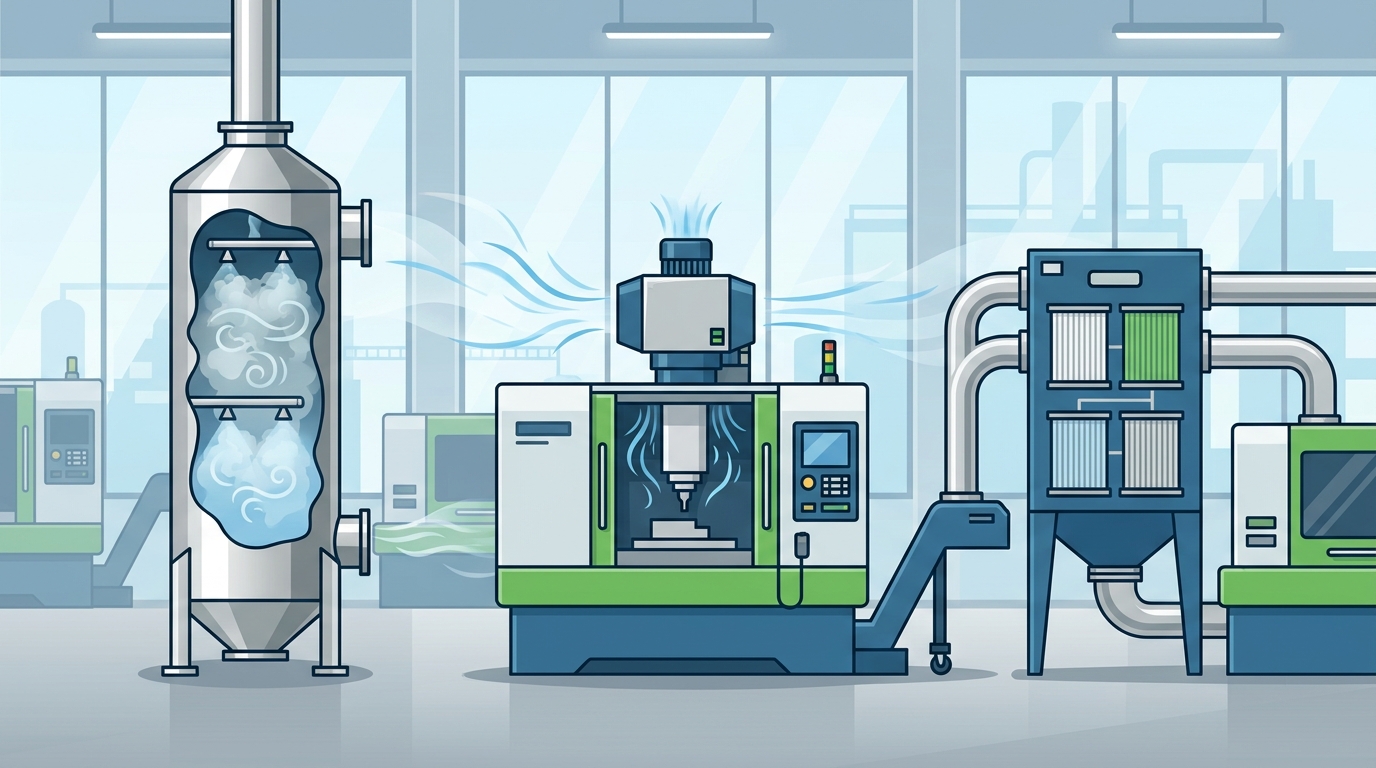
Wet scrubbers are air pollution control devices that use a liquid, typically water, to remove particulates and gases from an industrial gas stream. A wet scrubber is a system where the gas stream comes into contact with the liquid, causing the contaminants to dissolve or be trapped in droplets. This method is highly effective for removing soluble gases and fine particulates.
Wet scrubbers are commonly used in chemical processing, metal finishing, and other industries that generate corrosive or toxic fumes. They can handle high temperatures and high concentrations of contaminants that might overwhelm dry filtration systems. However, they require a water treatment system to handle the contaminated liquid.
Advantages of Wet Scrubbing
Wet scrubbers are versatile and can be designed to remove a wide range of contaminants. They are also effective at cooling hot gas streams. The main advantage is their ability to handle both particulates and gases in a single unit, making them a robust solution for complex air quality challenges.
HEPA Filtration Systems
Monitoring and Maintenance
Oil Mist Collectors
Oil mist collectors are a specific type of mist collector designed to capture oil droplets generated during machining and hydraulic operations. An oil mist collector is a device that separates oil from air using centrifugal force and filtration. These systems are essential for protecting machine tools from oil contamination and maintaining a clean work environment.
Direct-Mount vs. Ducted Systems
Direct-mount oil mist collectors are ideal for individual machines or compact layouts. They attach directly to the machine's enclosure, capturing mist at the source. Ducted systems are better suited for larger shops with multiple machines, where a central collector can serve several units. The choice depends on the specific needs of the facility.
Combustible Dust Collection
Combustible dust collection is a specialized area of dust collection that addresses the risks associated with flammable dusts. Combustible dust is a fine particulate that can ignite and cause explosions under the right conditions. Handling these materials requires specific safety measures, including explosion-proof equipment and proper grounding.
Safety Considerations
Key Takeaways
- HEPA filtration is essential for capturing fine particulates and smoke in industrial environments.
- General ventilation is a baseline strategy but is less effective than source capture for high-concentration emissions.
- Baghouse and cartridge dust collectors are the primary solutions for removing solid particulates from air streams.
- Mist collectors are specialized devices for capturing liquid droplets and mists from machining processes.
- Activated carbon filtration is used to remove gases, vapors, and odors from air streams.
- Wet scrubbers are effective for removing soluble gases and fine particulates using a liquid medium.
- Oil mist collectors protect machine tools and maintain a clean work environment by capturing oil droplets.
Frequently Asked Questions
What is the best mist collector for CNC machining?
The best mist collector for CNC machining depends on the specific machine and process. For compact layouts, a direct-mount unit like the Aeroex Mist-Fit is a strong fit. For more complex applications, a ducted system or a custom-engineered solution like the ARO-X may be recommended.
How do I choose the right mist collector for my machine shop?
Consider the machine type, coolant or oil type, airflow requirements, and mounting constraints. Aeroex can help you evaluate these factors to select the right system for your specific needs.
When should I use a direct-mount mist collector?
Direct-mount mist collectors are ideal for individual CNC machines with limited floor space. They provide source capture at the machine with easy installation and reduced ductwork.
What is the difference between a mist collector and a dust collector?
Can a mist collector handle combustible dust?
How often do I need to maintain a mist collector?
Maintenance frequency depends on the usage and contaminant load. Regular cleaning of filters and drains is necessary to ensure optimal performance. Aeroex provides maintenance guidelines for its products.
What is the role of activated carbon in air filtration?
Activated carbon is used to adsorb gases, vapors, and odors. It is often paired with HEPA filters to provide comprehensive air purification.
Are wet scrubbers suitable for all industrial applications?
Wet scrubbers are effective for removing soluble gases and fine particulates, but they may not be suitable for all applications. They require a water treatment system and are best used for specific types of contaminants.
Conclusion
Selecting the right industrial air filtration solution is a critical step in ensuring worker safety and maintaining a healthy work environment. By understanding the different technologies available, from HEPA filtration to mist collection, you can make informed decisions that benefit your facility. Aeroex is committed to providing tailored solutions that meet the specific needs of your operation. To discuss your air quality challenges and find the right solution, contact Aeroex today.