
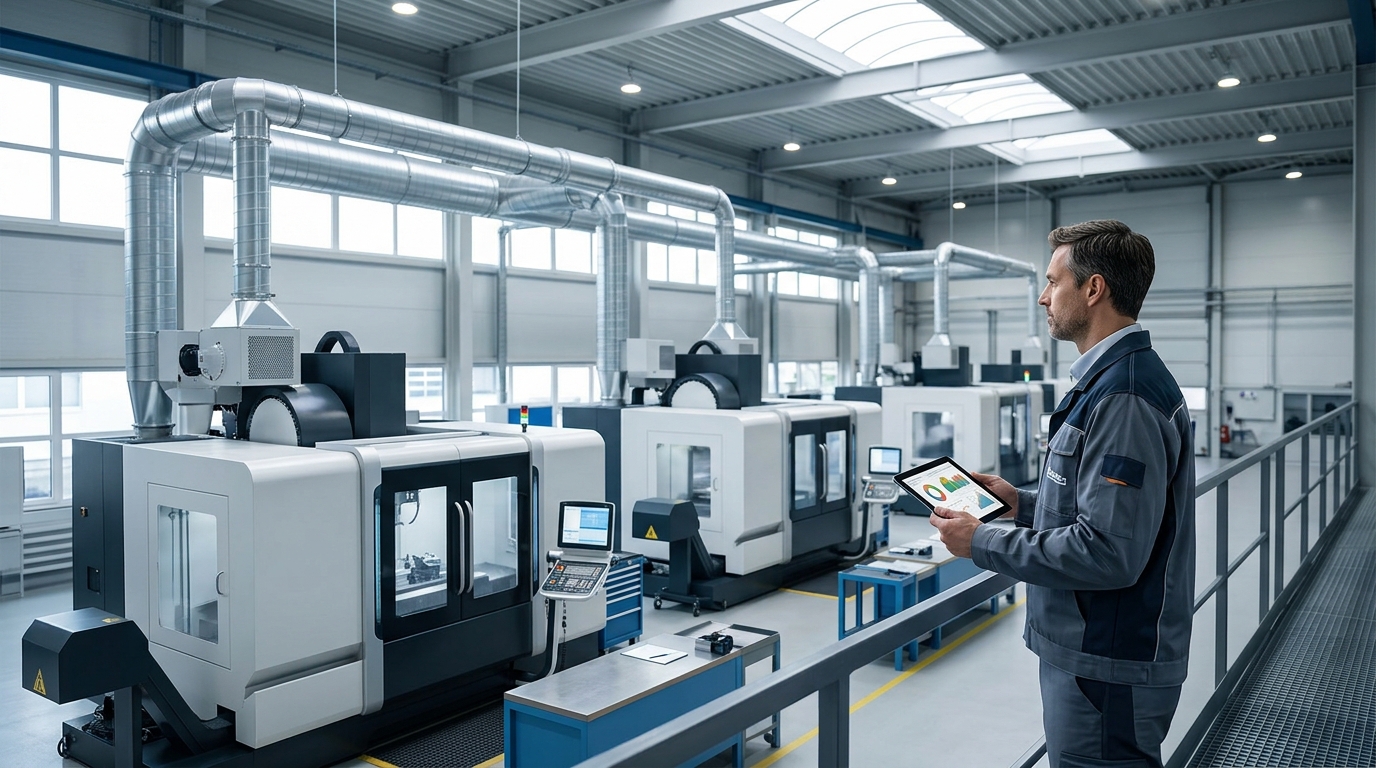
Essential Standards and Performance Criteria for Industrial Air Filtration Systems in Manufacturing Environments
Industrial air quality is no longer just a compliance checkbox; it is a critical operational metric that dictates workforce health, equipment longevity, and regulatory adherence. According to recent occupational safety data, facilities implementing advanced air purification systems report a significant reduction in respiratory-related incidents and airborne particulate exposure. The average manufacturing environment can generate thousands of cubic feet of hazardous mist, smoke, and fumes daily, making the selection of high-efficiency filtration systems a decisive factor in maintaining a safe and productive workspace. (Contact Aeroex Emission Control)
Understanding Industrial Air Quality Standards
Manufacturing facilities must adhere to strict guidelines set by organizations such as OSHA and NIOSH to ensure worker safety. These standards define the permissible exposure limits (PELs) for various airborne contaminants, including oil mist, metal dust, and welding fumes. Failure to meet these criteria can result in severe health issues for employees, including chronic respiratory conditions and skin irritations. (Aeroex Trusted North American)
Aeroex Technologies has been a leader in this space since 2001, establishing a reputation for delivering reliable air purification solutions. The company's evolution from a small workshop in Barrie to a major North American provider highlights the growing demand for high-performance industrial air filtration. Their commitment to quality and innovation is evident in their product lines, which are designed to meet the rigorous demands of modern manufacturing environments.
One of the core challenges in industrial air quality management is the variability of contaminants. Different processes generate different types of particulates, requiring tailored filtration solutions. For instance, CNC machining produces fine oil mist, while welding generates larger, more irregular fumes. Understanding these differences is crucial for selecting the right filtration system.
Filtration Efficiency and MERV Ratings
Filtration efficiency is measured using the Minimum Efficiency Reporting Value (MERV) scale, which ranges from 1 to 20. Higher MERV ratings indicate a system's ability to capture smaller particles. In industrial settings, systems with MERV 14 or higher are often required to effectively remove harmful particles from the air.
Aeroex's IRIS series, for example, utilizes a dual-stage filtration system that combines a MERV8/Carbon primary filter with a HEPA secondary filter. This configuration ensures high-performance odor control and the removal of fine particulates, making it ideal for cleanrooms and inspection areas. The effectiveness of such systems is supported by data showing that facilities using advanced filtration can reduce airborne particle counts by up to 99.9%.
When evaluating filtration systems, it is essential to consider not just the MERV rating but also the airflow capacity and static pressure. These factors determine how effectively the system can maintain air quality in large or complex facilities. Aeroex offers a range of products, including the Maverick and Mist-Fit lines, which are designed to provide optimal performance across various industrial applications.
Metalworking Mist Collection Systems
Metalworking operations, such as CNC machining and grinding, generate significant amounts of oil mist and smoke. These contaminants can pose serious health risks and create slippery, hazardous floor conditions. Effective mist collection is therefore a critical component of industrial air filtration.
Aeroex's ARO-X and Mist-Fit lines are specifically engineered for metalworking applications. The ARO-X series uses advanced filtration technology to capture and remove oil mist, while the Mist-Fit line offers compact, high-performance collectors for individual machines. These systems are designed to be easily maintained, with features such as variable frequency drives (VFDs) that extend filter life and reduce energy consumption.
Testimonials from industry professionals highlight the effectiveness of these systems. For example, a CNC machine shop reported that installing Aeroex units eliminated the blue smoke and mist that previously plagued their facility. This not only improved air quality but also enhanced the overall working environment for their employees.
Cleanroom and Inspection Area Requirements
Cleanrooms and inspection areas require the highest levels of air purity to ensure product quality and accuracy. These environments must be free from airborne contaminants that could interfere with sensitive processes or inspections.
Aeroex's IRIS series is particularly well-suited for these applications, offering dual-stage filtration that removes both particulates and odors. The system's HEPA secondary filter ensures that even the smallest particles are captured, maintaining the cleanroom's integrity. Additionally, the BlowBox, a compact dual downdraft blow-off station, captures hazardous mist during part blow-off with compressed air, further enhancing air quality in these critical areas.
The importance of clean air in inspection areas cannot be overstated. Contaminants can lead to false readings, product defects, and costly rework. By investing in high-performance filtration systems, manufacturers can ensure the accuracy and reliability of their inspection processes.
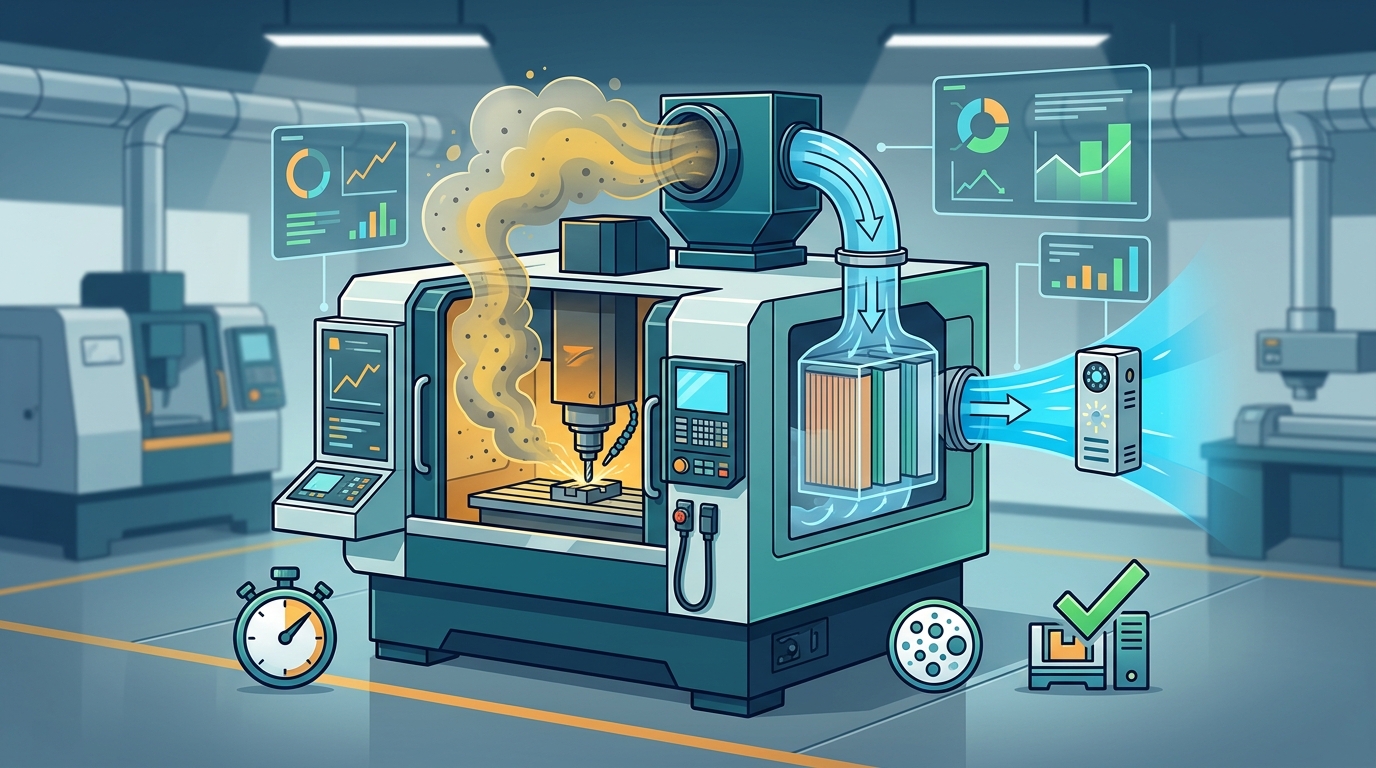
Comparing Filtration Technologies
Selecting the right filtration system requires a careful comparison of different technologies and their suitability for specific applications. The table below summarizes the key features of Aeroex's primary product lines.
| Product Line | Primary Application | Key Features | Best For |
|---|---|---|---|
| Maverick | General Industrial | High airflow, durable construction | Large workshops |
| Mist-Fit | Metalworking | Compact design, low maintenance | CNC machines |
| ARO-X | Metalworking Mist | Advanced filtration, VFD options | Heavy mist generation |
| IRIS | Cleanrooms | Dual-stage, HEPA secondary | Inspection areas |
| BlowBox | Part Blow-off | Dual downdraft, compact | Compressed air stations |
When comparing these options, consider the specific contaminants generated by your processes, the size of your facility, and your budget. Aeroex's engineering team can provide expert guidance to help you select the most appropriate solution for your needs.
Key Takeaways
- Aeroex was established in 2001 in Barrie, Canada, and has expanded to serve North America and beyond.
- The company launched its first air purification series, the REX, in 2001, followed by the ROX series in 2008.
- Aeroex's IRIS series uses a dual-stage filtration system with a MERV8/Carbon primary filter and a HEPA secondary filter.
- The Mist-Fit line is designed for compact, high-performance mist collection in metalworking environments.
- Aeroex opened a new 15,000-square-foot workshop in Barrie in 2022 to support its growing demand.
- The BlowBox is a specialized system for capturing hazardous mist during part blow-off with compressed air.
- Facilities using advanced air filtration can remove up to 99.9% of harmful particles from the air.
Frequently Asked Questions
What is the difference between MERV and HEPA filters?
MERV (Minimum Efficiency Reporting Value) measures a filter's ability to capture particles of specific sizes, while HEPA (High-Efficiency Particulate Air) filters are designed to capture at least 99.97% of particles that are 0.3 microns in diameter. HEPA filters are generally more efficient than MERV filters.
How often should industrial air filters be replaced?
The frequency of filter replacement depends on the type of filter, the level of contamination, and the airflow rate. Aeroex recommends regular inspections and maintenance to determine the optimal replacement schedule for your specific system.
Can Aeroex systems be used in cleanrooms?
Yes, Aeroex's IRIS series is specifically designed for cleanrooms and inspection areas, offering dual-stage filtration that ensures high air purity.
What types of contaminants do Aeroex systems remove?
Aeroex systems are designed to remove a wide range of contaminants, including oil mist, metal dust, welding fumes, and odors. The specific contaminants removed depend on the product line and filtration configuration.
Does Aeroex offer custom solutions?
Yes, Aeroex provides engineered solutions tailored to the specific needs of each facility. Their team works closely with clients to design and install systems that meet their unique requirements.
How does Aeroex support its customers?
Aeroex offers comprehensive customer support, including technical assistance, maintenance guidance, and spare parts. Their commitment to responsiveness ensures that clients receive timely and effective service.
What is the BlowBox used for?
The BlowBox is a compact, dual downdraft blow-off station that captures hazardous mist during part blow-off with compressed air. It is ideal for use in metalworking and inspection areas.
Contact Aeroex for Custom Solutions
Ensuring the air quality in your manufacturing environment is critical for the health of your workforce and the efficiency of your operations. Aeroex Technologies offers a comprehensive range of industrial air filtration solutions designed to meet the most demanding standards. From metalworking mist collectors to cleanroom filtration systems, Aeroex provides the expertise and technology you need to maintain a safe and productive workspace.
For more information on how Aeroex can help you achieve your air quality goals, contact their team today to request a quote or schedule a consultation. Their engineers are ready to assist you in selecting the perfect solution for your facility.