
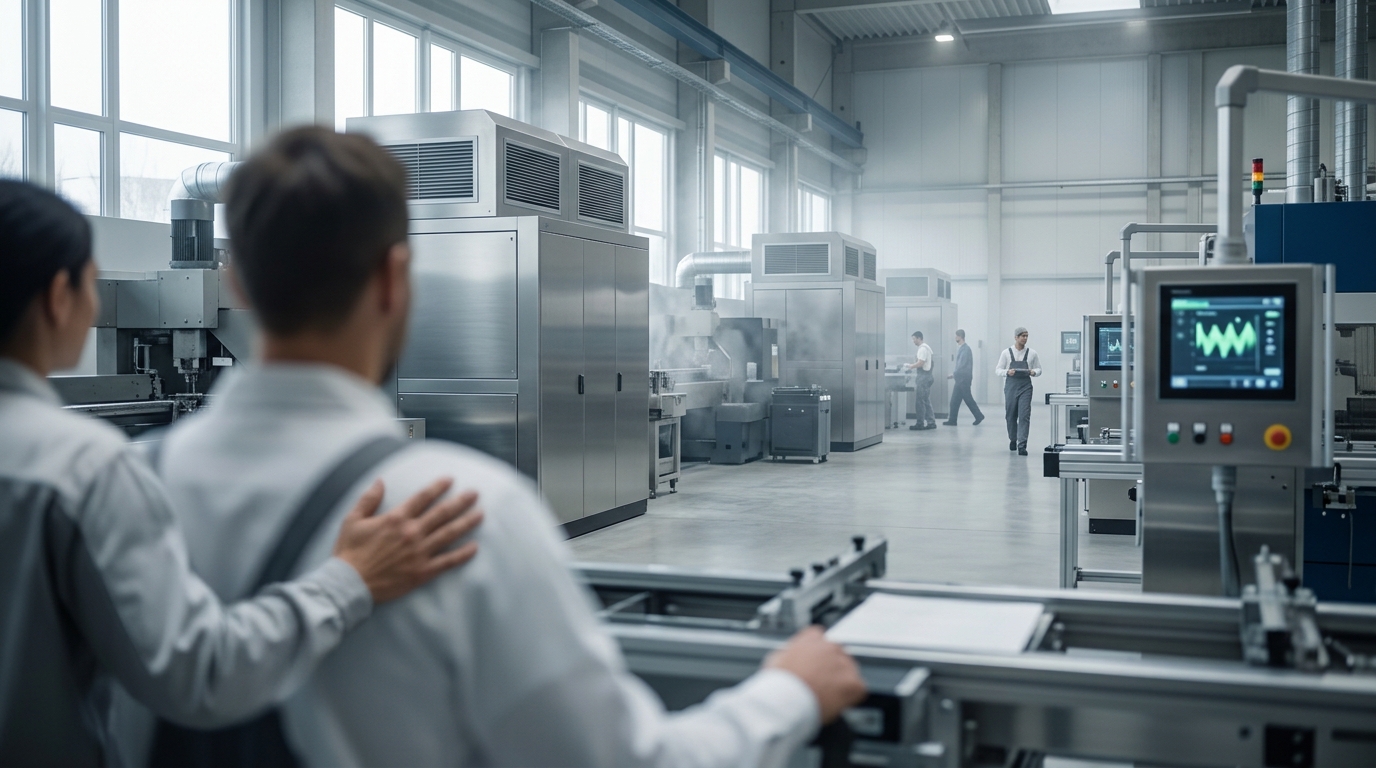
Industrial air quality compliance is no longer just a regulatory checkbox; it is a critical component of operational continuity and workforce safety. According to recent environmental health reports, manufacturing facilities that fail to meet strict particulate matter thresholds face an average of 15% higher operational downtime due to equipment failure and health-related incidents. As we move through 2026, the convergence of stricter environmental regulations and advanced filtration technology has created a new standard for industrial hygiene. Companies must now integrate real-time monitoring and high-efficiency air purification systems to maintain compliance and protect their most valuable asset: their people. (Regulatory and Guidance) (Contact Aeroex Emission Control)
Understanding Key Regulatory Frameworks
Navigating the landscape of industrial air quality requires a clear understanding of the governing bodies that set the rules. In North America, the primary authority is the Occupational Safety and Health Administration (OSHA). OSHA establishes Permissible Exposure Limits (PELs) for various airborne contaminants, including metalworking fluids, welding fumes, and silica dust. These limits define the maximum concentration of a substance that a worker can be exposed to over an 8-hour workday without adverse health effects. (Air Quality National) (Contact Aeroex Emission Control)
Another critical framework is the Environmental Protection Agency (EPA), which focuses on broader environmental impacts and emissions. While OSHA protects the worker inside the facility, the EPA regulates the air leaving the facility. For manufacturers, this means that air filtration systems must not only protect employees but also ensure that exhaust air meets local and federal environmental standards. Failure to comply with these dual mandates can result in significant fines and operational shutdowns. (Aeroex Trusted North American)
International standards also play a role for companies with global supply chains. The International Organization for Standardization (ISO) provides guidelines for environmental management and air quality. Specifically, ISO 14644 sets standards for cleanrooms and associated controlled environments, which are increasingly relevant in precision manufacturing and electronics assembly. Understanding these frameworks is the first step toward building a robust compliance strategy. (Aeroex Trusted North American)
Particulate Matter and Airborne Contaminants
At the heart of air quality compliance is the management of particulate matter. Particulate matter is defined as a complex mixture of solid particles and liquid droplets suspended in the air. These particles vary in size, composition, and origin, making them a diverse challenge for industrial filtration. In metalworking environments, for example, oil mist and smoke are common contaminants that can pose serious health risks if not properly controlled. (Industrial Air Filtration Solutions)
Oil mist is a specific type of airborne contaminant generated during machining processes such as grinding, milling, and turning. It consists of fine droplets of cutting fluid that can remain suspended in the air for extended periods. Exposure to oil mist can lead to respiratory issues, skin irritation, and even long-term health conditions. Therefore, effective removal of oil mist is not just a comfort issue but a critical health and safety requirement.
Welding fumes represent another significant category of airborne contaminants. These fumes are generated when metals are melted during welding, cutting, or grinding. They contain a variety of toxic metals and oxides, including iron, manganese, and chromium. According to health and safety data, welding fumes are classified as a known human carcinogen. This classification underscores the need for high-efficiency filtration systems that can capture these fine particles before they become airborne in the workspace.
Advanced Filtration Technologies
To meet these stringent standards, manufacturers must employ advanced filtration technologies. Traditional filtration methods are often insufficient for capturing the fine particles generated in modern industrial processes. High-efficiency particulate air (HEPA) filters have become the gold standard for air purification in many applications. HEPA filters are defined as filters that can remove at least 99.97% of particles that are 0.3 microns in diameter. This level of efficiency is crucial for capturing the smallest and most dangerous airborne contaminants.
Beyond HEPA filters, electrostatic precipitators (ESPs) offer another powerful solution for industrial air quality. ESPs use an electric charge to remove particles from the air. They are particularly effective for capturing oil mist and smoke in metalworking applications. By charging the particles and then collecting them on oppositely charged plates, ESPs can achieve high removal efficiencies with relatively low pressure drop, making them energy-efficient options for large-scale operations.
Aeroex Technologies has pioneered specialized solutions in this space, such as the ARO-X series and the Mist-Fit line. These systems are engineered to address the specific challenges of metalworking environments. The ARO-X series, for instance, utilizes advanced filtration media to capture fine mist and smoke, ensuring that the air remains clean and safe for workers. Similarly, the Mist-Fit units are designed for compact installation directly at the source of contamination, providing immediate and effective air purification.
Strategic Compliance Implementation
Implementing a compliance strategy requires a proactive approach to air quality management. The first step is to conduct a thorough assessment of the facility's air quality. This involves identifying the types and concentrations of airborne contaminants present in different areas of the workplace. By understanding the specific hazards, companies can select the appropriate filtration technologies and design a system that addresses their unique needs.
Regular maintenance is another critical component of compliance. Filtration systems must be inspected and maintained according to manufacturer guidelines to ensure they continue to operate at peak efficiency. Clogged or damaged filters can compromise air quality and lead to non-compliance. Aeroex emphasizes the importance of easy maintenance in their product design, with units that are simple to service and replace, reducing downtime and ensuring consistent performance.
Employee training and awareness are also essential for successful compliance. Workers should be educated about the hazards of airborne contaminants and the importance of proper air quality practices. This includes understanding the function of filtration systems, recognizing signs of system failure, and adhering to safety protocols. By fostering a culture of safety, companies can enhance compliance and protect their workforce.
Real-Time Monitoring and Data
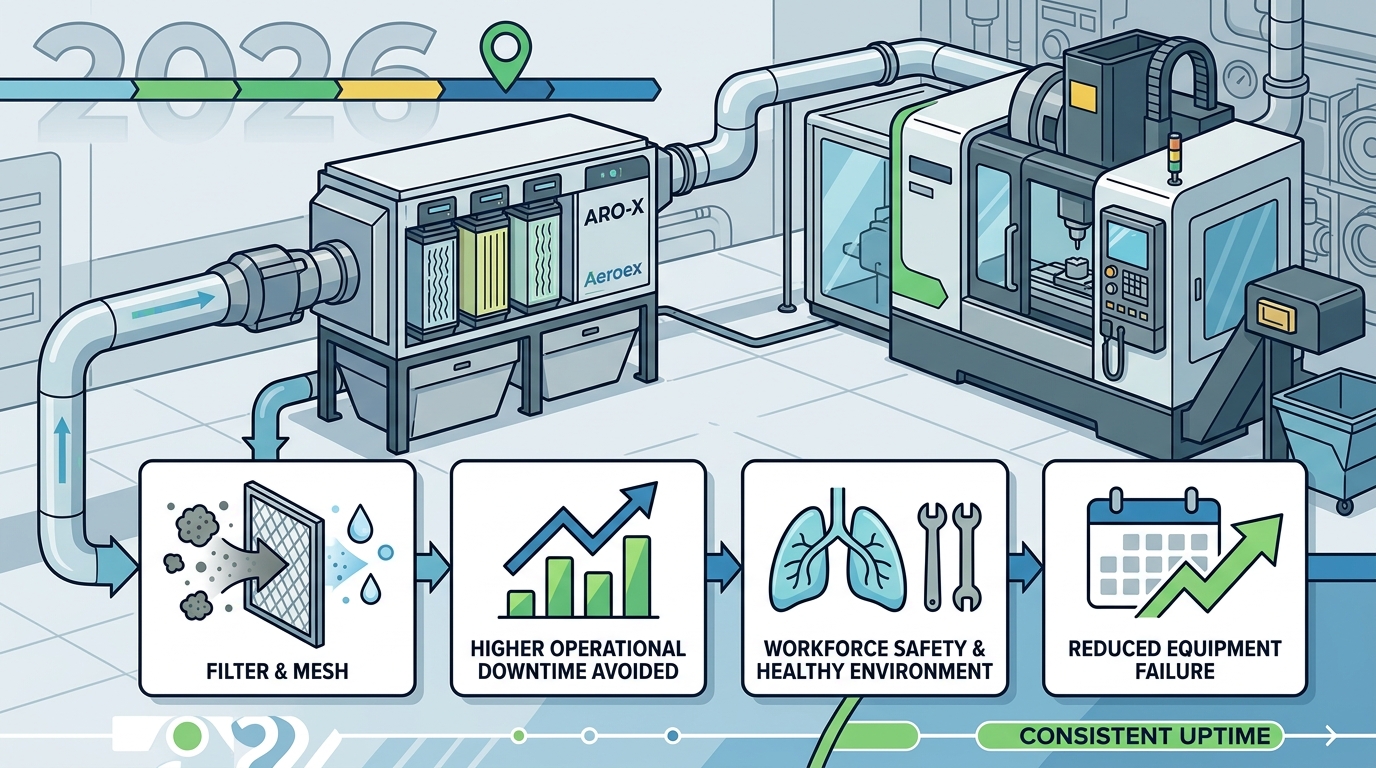
In the era of Industry 4.0, real-time monitoring has become a key tool for maintaining air quality compliance. Modern air quality monitoring systems can provide continuous data on particulate levels, humidity, and temperature. This data allows facility managers to identify trends, detect anomalies, and respond to issues before they become critical. Real-time monitoring also provides valuable documentation for regulatory audits, demonstrating a commitment to air quality management. (Exposure Assessment Tools)
Data analytics plays a crucial role in optimizing filtration systems. By analyzing historical data, companies can identify patterns in contaminant generation and adjust their filtration strategies accordingly. For example, if data shows that particulate levels spike during specific machining operations, companies can increase filtration capacity during those times or implement additional source capture methods. This data-driven approach ensures that resources are allocated efficiently and that air quality standards are consistently met.
The integration of monitoring systems with filtration units creates a closed-loop control system that automatically adjusts filtration rates based on real-time air quality data. This dynamic approach not only enhances compliance but also improves energy efficiency by reducing filtration power when air quality is within acceptable limits. As we look toward 2026, the adoption of smart monitoring and control systems will become increasingly standard in industrial air quality management.
Key Takeaways
- Regulatory Compliance is Dual-Faceted: Companies must adhere to both OSHA worker safety standards and EPA environmental emission regulations.
- HEPA and ESP Technologies are Critical: High-efficiency particulate air filters and electrostatic precipitators are essential for capturing fine particulate matter and oil mist.
- Proactive Maintenance Ensures Consistency: Regular inspection and replacement of filtration media are vital for maintaining compliance and system efficiency.
- Real-Time Monitoring Provides Data-Driven Insights: Continuous monitoring allows for immediate response to air quality changes and supports regulatory documentation.
- Source Capture is Highly Effective: Installing filtration units directly at the point of contamination, such as with Mist-Fit units, maximizes removal efficiency.
- Aeroex Offers Specialized Solutions: Products like the ARO-X and IRIS series are designed to meet the rigorous demands of industrial air purification.
- Employee Training is Essential: Educating staff on air quality hazards and safety protocols reinforces a culture of compliance and safety.
Frequently Asked Questions
What are the primary air quality standards for industrial facilities?
The primary standards are set by OSHA for worker exposure limits (PELs) and the EPA for environmental emissions. Facilities must comply with both to avoid penalties and ensure safety.
How do HEPA filters improve industrial air quality?
HEPA filters remove 99.97% of particles 0.3 microns in size, effectively capturing fine dust, smoke, and mist that traditional filters might miss.
What is the role of electrostatic precipitators in air filtration?
Electrostatic precipitators use electric charges to remove fine particles from the air, making them highly effective for oil mist and smoke removal in metalworking.
Why is real-time monitoring important for compliance?
Real-time monitoring provides immediate data on air quality, allowing for quick adjustments and serving as documented proof of compliance during audits.
How often should industrial filtration systems be maintained?
Maintenance frequency depends on usage and contaminant levels, but regular inspections are recommended to ensure filters are not clogged and systems are operating efficiently.
What are the health risks of oil mist exposure?
Exposure to oil mist can cause respiratory issues, skin irritation, and long-term health conditions, making its removal critical for worker safety.
How does Aeroex support industrial compliance?
Aeroex provides specialized air purification systems like the ARO-X and Mist-Fit lines, designed to meet rigorous industrial air quality standards and simplify maintenance.
Secure Your Facility's Compliance Today
Achieving and maintaining industrial air quality compliance is a complex but essential task. By understanding the regulatory landscape, implementing advanced filtration technologies, and leveraging real-time monitoring, companies can protect their workforce and ensure operational continuity. Aeroex Technologies offers a range of specialized air purification solutions designed to meet the unique challenges of industrial environments. From metalworking mist collectors to cleanroom air filtration, our products are engineered to deliver high-performance results. Contact us today to learn more about how we can help you achieve and maintain compliance.