
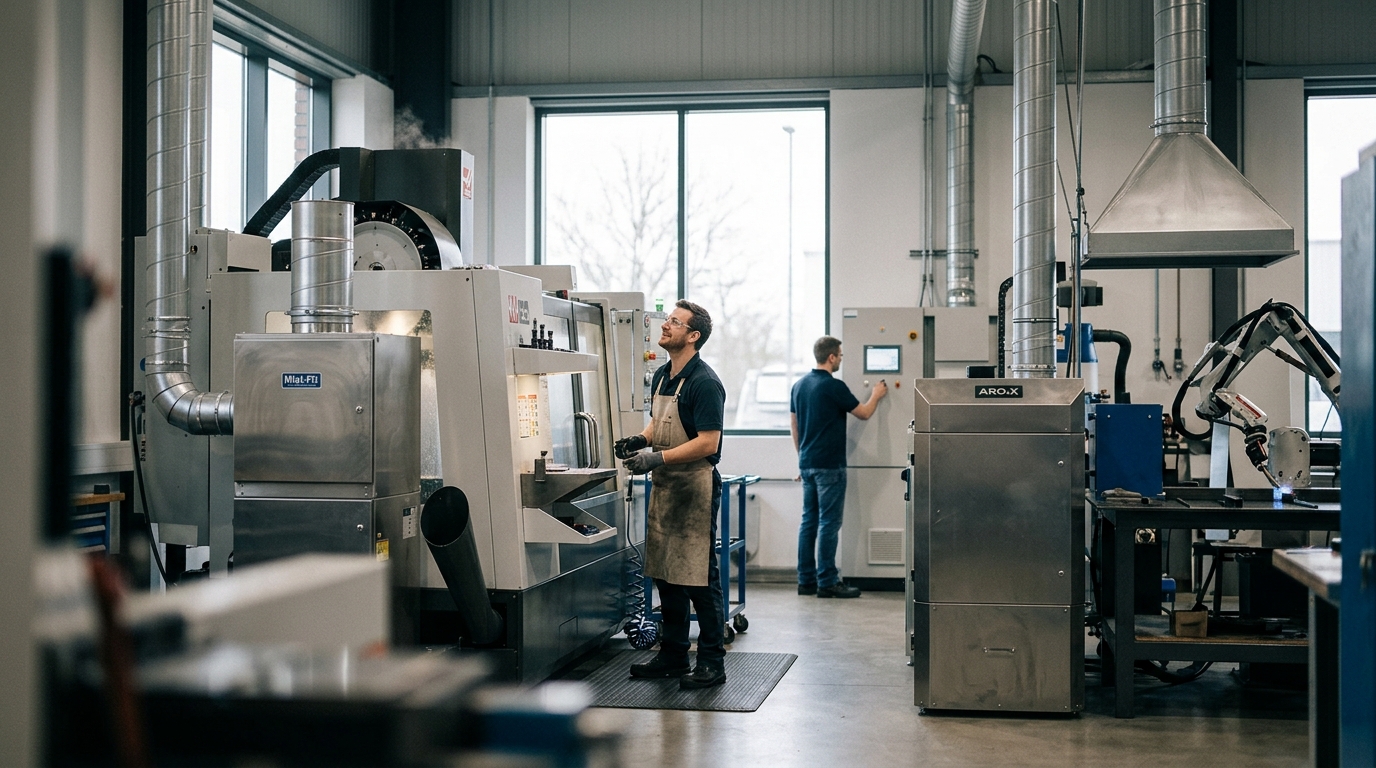
Dust collection and fume extraction serve different purposes in industrial air quality management. Dust collection systems are designed to capture larger solid particulates, while fume extraction systems target fine, often toxic, airborne particles generated by heat or chemical processes. For manufacturers, understanding this distinction is critical for selecting the right equipment to protect worker health and ensure regulatory compliance. Aeroex specializes in engineered air filtration solutions that address these specific airborne contaminants, helping facilities maintain a safe and clean work environment.
Understanding Dust Collection Systems
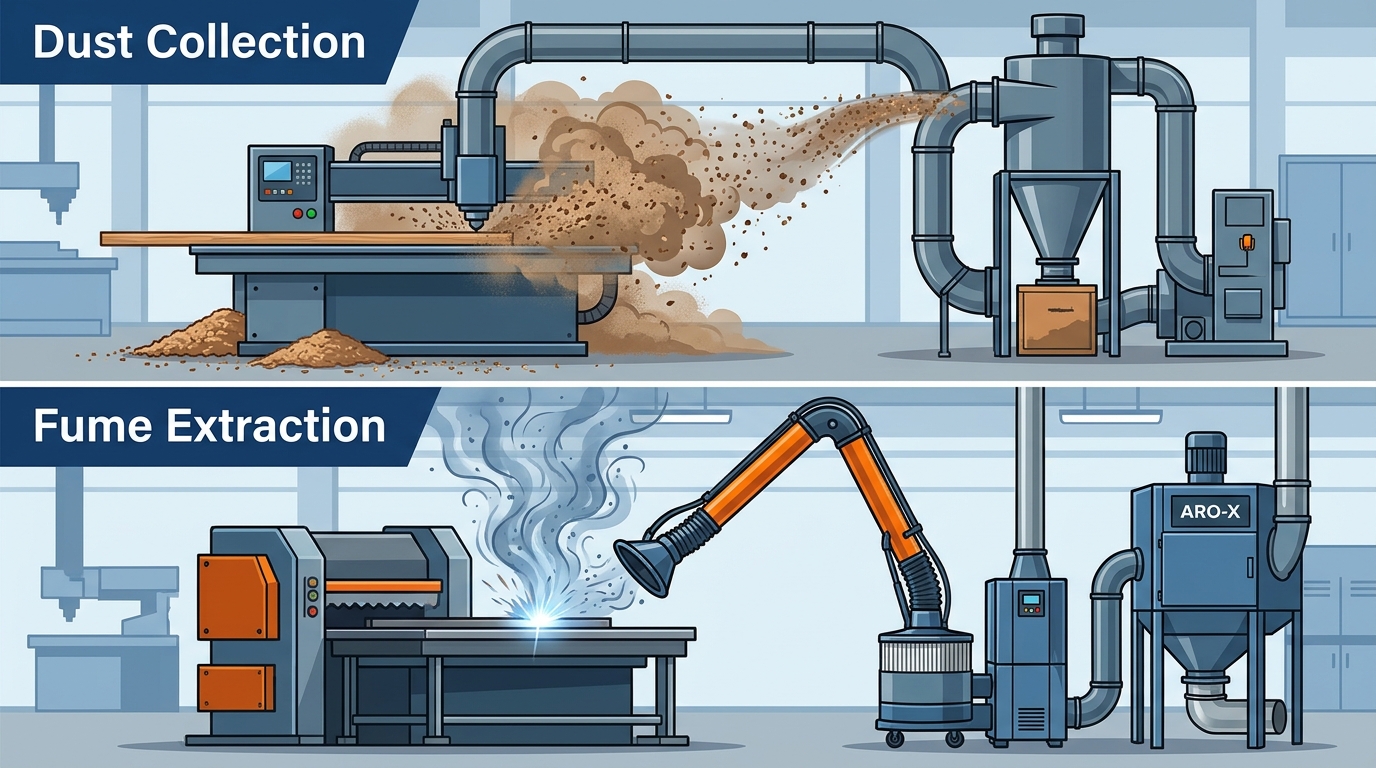
Dust collection is the process of removing solid particulate matter from the air in industrial settings. These systems are typically designed to handle larger particles, such as wood chips, metal shavings, or sawdust, which are generated during cutting, grinding, or sanding operations. The primary goal of dust collection is to prevent the accumulation of loose material on floors and equipment, which can create slip hazards and reduce machine efficiency. While these systems are effective for bulk solids, they are generally not designed to capture the ultra-fine particles that characterize fumes or mists.
Characteristics of Dust
Dust particles are typically larger than 10 microns in diameter. Because of their size, they are often visible to the naked eye and settle relatively quickly if not captured. Dust collection systems often use cyclones or baghouses to separate these larger particles from the air stream. In many manufacturing environments, dust collection is a first line of defense for housekeeping and basic air quality control. However, relying solely on dust collection for processes that generate fine aerosols or toxic vapors is insufficient for protecting worker respiratory health.
Understanding Fume Extraction Systems
Fume extraction is a specialized form of air filtration designed to capture fine particulates and gases generated by high-temperature processes or chemical reactions. Fumes are typically defined as solid particles that are vaporized and then condensed back into a solid state, often resulting in particles smaller than 1 micron. These particles can remain airborne for extended periods and are easily inhaled deep into the lungs. Fume extraction systems use high-efficiency filters, such as HEPA or activated carbon, to remove these hazardous contaminants from the air. This technology is essential for processes like welding, laser cutting, and 3D printing, where toxic byproducts are a significant concern.
Characteristics of Fumes
Fumes are often invisible or appear as a faint haze, making them difficult to detect without proper monitoring. Unlike dust, fumes do not settle quickly and can disperse throughout a facility, exposing workers to harmful levels of particulate matter. The composition of fumes depends on the materials being processed; for example, welding steel produces different fumes than welding aluminum. Effective fume extraction requires a system that can capture the full spectrum of particle sizes, from the visible smoke to the submicron aerosols that pose the greatest health risk.
Key Differences Between Dust and Fume Control
The primary difference between dust collection and fume extraction lies in the particle size and the filtration technology required to capture them. Dust collection systems are optimized for larger, heavier particles, while fume extraction systems are engineered to handle fine, lightweight aerosols. This distinction impacts the design of the intake, the type of filter media used, and the overall airflow requirements of the system. Choosing the wrong type of system can result in poor air quality, increased maintenance costs, and potential health hazards for employees.
| Feature | Dust Collection | Fume Extraction |
|---|---|---|
| Particle Size | Typically > 10 microns | Typically < 1 micron |
| Primary Source | Cutting, grinding, sanding | Welding, laser, 3D printing |
| Filtration Media | Baghouse, cyclone, cartridge | HEPA, activated carbon |
| Visibility | Often visible | Often invisible or faint haze |
| Health Risk | Respiratory irritation | Chronic respiratory disease, cancer |
| System Complexity | Lower | Higher |
When to Use Dust Collection
Dust collection is the appropriate choice for operations that generate large amounts of solid waste, such as woodworking, stone cutting, or abrasive blasting. These systems are cost-effective for managing bulk solids and maintaining a clean workspace. If your primary concern is housekeeping and preventing the accumulation of loose material, a dust collection system is a strong fit. However, if your process involves high-temperature operations or the use of synthetic materials that release toxic fumes, dust collection alone will not provide adequate protection.
When to Use Fume Extraction
Fume extraction is essential for processes that generate fine, toxic particles, such as welding, laser cutting, and additive manufacturing. These systems are designed to capture the hazardous fraction of airborne contaminants that poses the greatest risk to worker health. For facilities engaged in metalworking or plastic processing, fume extraction is a critical component of a comprehensive air quality strategy. Aeroex offers engineered fume extraction solutions that are customized to handle the specific contaminants generated by your processes, ensuring that your facility meets the highest standards of air quality and worker safety.
Choosing the Right System for Your Facility
Selecting the right air control system requires a thorough assessment of your specific processes and the contaminants they generate. For facilities with mixed operations, a combination of dust collection and fume extraction may be necessary. It is important to consider the type of materials being processed, the volume of contaminants produced, and the layout of your facility. Aeroex works closely with manufacturers to design tailored solutions that address their unique air quality challenges, ensuring that every part of the workspace is protected from harmful airborne particles.
Assessing Your Needs
Begin by identifying the primary sources of airborne contaminants in your facility. Determine whether the contaminants are primarily solid particulates (dust) or fine aerosols (fumes). This assessment will guide your selection of the appropriate filtration technology. Additionally, consider the airflow requirements and the space available for equipment installation. A well-designed system will effectively capture contaminants at the source, minimizing their dispersion into the general workspace.
FAQ
Can a dust collector be used for fume extraction?
No, a standard dust collector is not designed to capture the fine particles associated with fumes. Using a dust collector for fume extraction can result in poor filtration efficiency and potential health risks. Fume extraction requires specialized high-efficiency filters, such as HEPA, to capture submicron particles.
What is the main difference between dust and fumes?
The main difference is particle size and origin. Dust consists of larger solid particles generated by mechanical processes, while fumes are fine particles created by vaporization and condensation during high-temperature or chemical processes.
How do I know if I need fume extraction?
If your facility uses processes like welding, laser cutting, or 3D printing, you likely need fume extraction. These processes generate toxic fumes that pose significant health risks if not properly captured and filtered.
Can I use one system for both dust and fumes?
Some advanced systems can handle both, but it depends on the specific design and filtration stages. For most facilities, it is more effective to use dedicated systems for each type of contaminant to ensure optimal performance and safety.
How often should I replace filters in a fume extraction system?
Filter replacement frequency depends on the volume and type of contaminants captured. Regular monitoring and maintenance are essential to ensure that the system continues to operate at peak efficiency and that filters are replaced before they become saturated.
Conclusion
Understanding the difference between dust collection and fume extraction is essential for maintaining a safe and healthy industrial environment. While dust collection manages larger solid particulates, fume extraction targets the fine, toxic aerosols that pose the greatest risk to worker health. By selecting the right system for your specific processes, you can protect your employees and ensure compliance with air quality standards. Aeroex provides expert guidance and engineered solutions to help you navigate these choices, ensuring that your facility is equipped with the right technology for cleaner air and safer operations. To discuss your specific air quality needs, for a personalized consultation.