
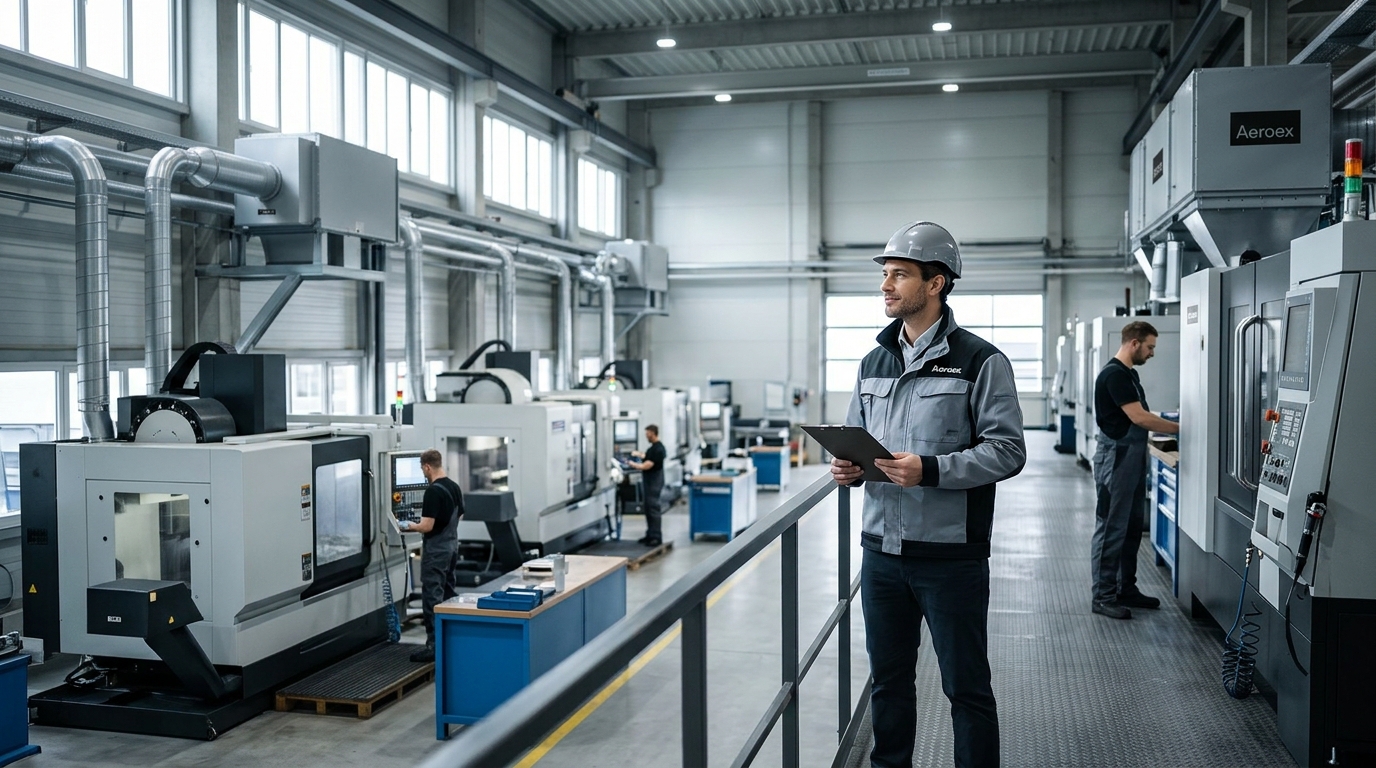
7 Key Advantages of Electrostatic Precipitators for Custom Factory Projects
Electrostatic precipitators (ESPs) are a specialized air purification technology that uses electrical charges to capture airborne particles. For custom factory projects, they offer distinct benefits over traditional mechanical filtration, particularly in handling fine mists and vapors. Aeroex integrates these advanced technologies into engineered solutions to address complex industrial air quality challenges.
1. High Efficiency for Ultra-Fine Particles
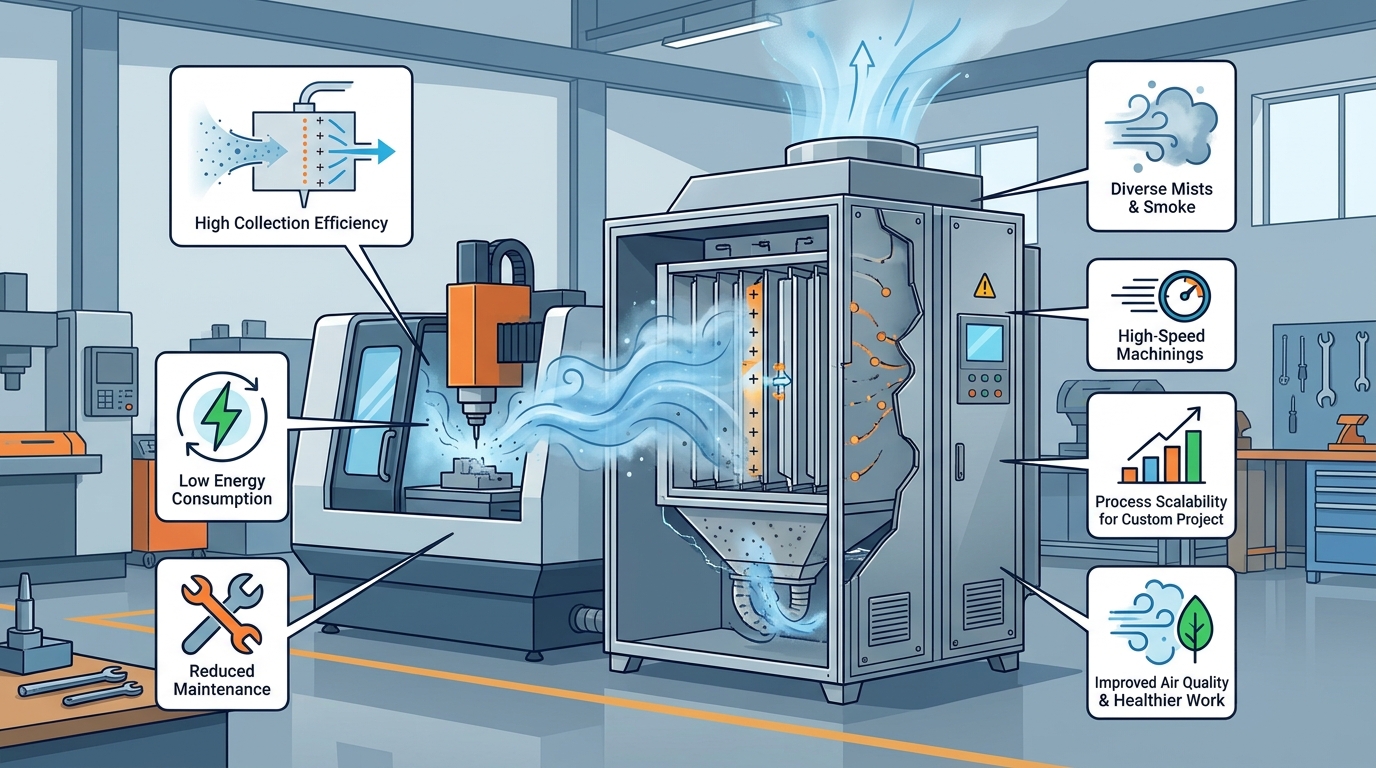
ESPs capture sub-micron particles that often bypass standard filters. Electrostatic precipitators work by ionizing particles in the air stream, causing them to adhere to oppositely charged collection plates. This mechanism is highly effective for capturing ultra-fine mist and smoke generated during high-speed machining or chemical processes. Because the capture relies on electrical attraction rather than physical barrier size, ESPs maintain high efficiency even when dealing with the smallest airborne contaminants.
2. Low Pressure Drop and Energy Efficiency
Reduced airflow resistance lowers long-term operational costs. Unlike dense filter beds that clog over time, electrostatic precipitators typically exhibit a lower pressure drop across the system. This means the fans required to move air through the unit consume less energy to achieve the same airflow rates. For facilities running continuous shifts, this energy efficiency translates into significant savings on utility bills over the lifespan of the equipment.
3. Regenerable Collection Surfaces
Collection plates can be cleaned and reused, reducing waste. One of the primary advantages of ESPs is the ability to regenerate the collection surfaces. Instead of discarding clogged filters, the accumulated particulate matter can be removed through mechanical shaking or washing. This regenerability reduces the volume of solid waste generated by the facility and lowers the recurring cost of consumable filter media. It is a sustainable approach for high-volume industrial applications.
4. Effective Handling of High Moisture Environments
ESPs perform well in humid or washdown-adjacent areas. Traditional paper or synthetic filters can degrade or lose efficiency when exposed to high levels of moisture or steam. Electrostatic precipitators are less susceptible to moisture-related performance drops, making them a strong fit for environments with high humidity. This makes them suitable for processes where water vapor or coolant mist is a constant presence in the air stream.
5. Customizable Configuration for Complex Layouts
Modular designs allow for tailored airflow paths. In custom factory projects, standard off-the-shelf units often fail to meet specific spatial or airflow requirements. ESPs can be configured with varying numbers of stages and plate arrangements to match the specific load of the process. Aeroex engineers can design these systems to integrate seamlessly with existing ductwork or machine enclosures, ensuring optimal source capture.
6. Reduced Maintenance Frequency for Filter Media
Longer intervals between service visits improve uptime. Because the collection surfaces are regenerable, the frequency of filter replacement is significantly reduced compared to cartridge or baghouse systems. This allows maintenance teams to focus on other critical tasks rather than constantly swapping out filter elements. The result is less downtime for the production line and a more predictable maintenance schedule.
7. Versatility Across Diverse Industrial Processes
One technology can address multiple contaminant types. Electrostatic precipitators are not limited to a single type of pollutant. They can be tuned to handle oil mist, coolant mist, and certain vapors effectively. This versatility makes them a valuable component in multi-process facilities where different machines generate different types of airborne contaminants. A single engineered system can often serve multiple stations, simplifying the overall air management strategy.
Choosing the Right System
When selecting an air purification solution, consider the specific nature of your contaminants. If you are dealing with high volumes of fine mist or operating in a humid environment, an electrostatic precipitator may be the ideal choice. For standard oil mist collection in dry environments, a mechanical mist collector might be more cost-effective. Aeroex can help you evaluate your specific process requirements to determine the best technology for your facility.
Frequently Asked Questions
Do electrostatic precipitators require special maintenance?
Yes, they require periodic cleaning of the collection plates. This can be done through mechanical rapping or washing. The maintenance schedule depends on the particulate load and the specific design of the unit.
Can ESPs handle combustible dust?
How do ESPs compare to HEPA filters?
HEPA filters are excellent for capturing fine particles but have a higher pressure drop and are not regenerable. ESPs offer lower pressure drop and regenerability but may require more space and specialized maintenance. The choice depends on your specific efficiency and cost requirements.
Are ESPs suitable for small machine shops?
ESPs are typically larger and more complex than standard mist collectors. For small shops with low mist loads, a compact mechanical collector is often a better fit. ESPs are best suited for larger facilities or processes with high particulate loads.
Does Aeroex offer electrostatic precipitators?
Aeroex focuses on engineered air purification solutions. While they specialize in mist collection, they can integrate various technologies, including electrostatic precipitation, into custom systems based on your specific needs.