

Coolant Type Compatibility: Matching Mist Collectors to Your Fluid
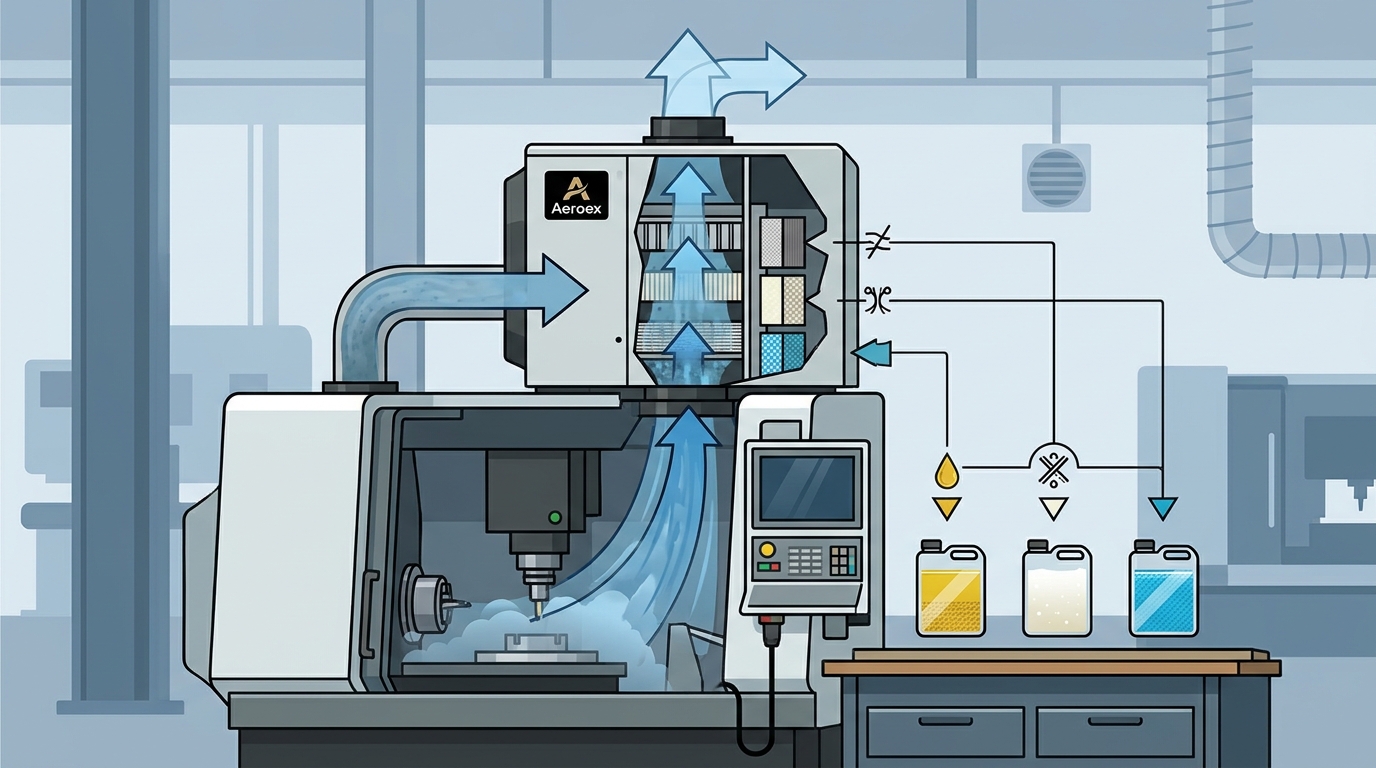
The right mist collector depends heavily on the specific coolant or oil in your sump. Aeroex systems are designed to handle straight oil, soluble oil emulsions, and synthetic coolants using a multi-stage filtration architecture. By matching the filtration media to your fluid chemistry, you ensure maximum filter life and consistent air quality. This guide explains how different coolant types interact with industrial mist collection systems.
Straight Oil and High-Viscosity Fluids
Straight oil is a common lubricant in grinding and heavy machining operations. It is a viscous fluid that generates dense, heavy mist particles. A mist collector is a device that captures these airborne droplets before they settle on equipment or are inhaled by operators. Because straight oil droplets are larger and heavier, they are easier to capture at the initial stages of filtration. The primary challenge with straight oil is its tendency to coat filter media, which can reduce airflow over time if not managed correctly.
In these applications, a depth-loading coalescer is the critical component. This stage captures the bulk of the liquid droplets, allowing the cleaner air to pass through to the final filtration stage. For shops running straight oil, the Mist-Fit is often a strong fit due to its compact design and efficient liquid handling. The system drains captured oil back to the sump or holds it for disposal, preventing the buildup of sticky residue on shop surfaces.
Soluble Oil Emulsions
Soluble oil emulsions are water-based mixtures that provide both lubrication and cooling. These fluids are widely used in CNC milling and turning centers. The mist generated by soluble oil is typically finer than that of straight oil, containing a mix of water and oil droplets. This finer mist can penetrate deeper into filter media if the pre-filtration stage is not robust enough. Therefore, the pre-filter plays a vital role in protecting the downstream HEPA or high-efficiency filters.
Synthetic Coolants and Odor Control
Synthetic coolants are water-based fluids that do not contain oil. They are popular in high-speed machining because they provide excellent cooling and reduce the risk of bacterial growth. However, synthetic coolants can break down over time, releasing volatile organic compounds (VOCs) and distinct odors. A mist collector is not just a particle filter; it is an air purification system that can address both particulate and gaseous contaminants. To handle the odors from synthetic coolant breakdown, an activated carbon stage is often added to the filtration train.
Carbon filters adsorb the chemical molecules responsible for unpleasant smells. This is a key differentiator for shops using synthetic fluids. The engineered solutions offered by Aeroex can integrate carbon filtration with standard HEPA stages. This combination ensures that the air exhausted back into the shop is not only free of visible mist but also free of odor. For facilities where air quality is a priority, this dual-stage approach is essential for maintaining a comfortable working environment.
Impact of Coolant Chemistry on Filter Life
The chemistry of your coolant directly impacts how long your filters last. Different fluids interact with filter media in unique ways. For example, some coolants contain additives that can cause foaming or chemical reactions with certain filter materials. Understanding these interactions is key to minimizing maintenance costs. A filter that lasts three years in one shop might only last six months in another, depending on the specific fluid formulation and machine usage.
Aeroex designs its systems with long filter life in mind. The Maverick series, for instance, features monitoring systems that track filter condition and airflow. This data helps operators predict when a filter needs replacement, preventing unexpected downtime. By choosing a system that matches your coolant type, you can optimize the service interval. Regular inspection of the pre-filter and coalescer stages ensures that the final HEPA filter remains protected, extending its operational life significantly.
Selecting the Right System for Your Fluid
Choosing the right mist collector requires a clear understanding of your process. You should start by identifying the exact type of fluid in your sump. Is it straight oil, soluble emulsion, or synthetic? Next, assess the volume of mist generated. High-speed machines with large coolant pumps will require more robust systems. Finally, consider the space constraints in your shop. If you have limited floor space, a direct-mount unit is often the best choice.
The metalworking mist collectors from Aeroex are designed to handle all three major coolant types. The same filter-based platform can be configured for your specific fluid chemistry. This flexibility means you do not need to buy different machines for different coolant types. Instead, you can use a single, reliable platform that adapts to your needs. For complex applications involving multiple machines or unique contaminants, an engineer-reviewed recommendation is highly recommended to ensure optimal performance.
Key Takeaways
- Straight oil generates heavy mist that is easily captured by depth-loading coalescers.
- Soluble oil emulsions produce finer mist that requires robust pre-filtration to protect HEPA stages.
- Synthetic coolants may require activated carbon stages to control odors from fluid breakdown.
- Coolant chemistry directly impacts filter life and maintenance intervals.
- The Aeroex Mist-Fit is a strong fit for compact, direct-mount applications with various coolant types.
- The ARO-X platform is designed for higher airflow demands and complex multi-machine setups.
- Always match the filtration media to your specific fluid chemistry for optimal results.
Frequently Asked Questions
Can the same mist collector handle both oil and coolant mist?
Yes. An oil mist collector and a coolant mist collector are not separate machines. They are the same filter-based platform configured for your fluid chemistry. Aeroex systems use a multi-stage architecture that handles all three major coolant types: straight oil, soluble oil emulsion, and synthetic coolant.
How does coolant type affect filter life?
The chemical composition of the coolant determines how quickly filter media becomes saturated. Straight oil tends to coat filters, while synthetic coolants may cause chemical interactions. Monitoring systems and regular pre-filter maintenance can help extend the life of the final HEPA filter.
Do I need a carbon filter for synthetic coolant?
It is recommended. Synthetic coolants can break down and release odors. An activated carbon stage adsorbs these chemical compounds, ensuring the exhausted air is odor-free. This is a key feature for maintaining a comfortable shop environment.
What is the best mounting option for a single CNC machine?
For a single machine with limited floor space, a direct-mount unit like the Mist-Fit is often the best choice. It captures mist at the source, reduces the need for ductwork, and integrates easily with the machine enclosure.
How do I know if I need an engineered solution?
If you have multiple machines, high airflow requirements, or unique contaminants like fumes or vapors, an engineered solution is recommended. The ARO-X platform is modular and can be tailored to meet complex industrial air quality needs.
Conclusion
Matching your mist collector to your coolant type is essential for maintaining air quality and minimizing maintenance. Whether you are running straight oil, soluble emulsions, or synthetic coolants, Aeroex offers a platform that can be configured to meet your specific needs. By understanding the interaction between your fluid and the filtration media, you can make an informed decision that protects your investment and your team. To find the right fit for your shop, contact us for a personalized recommendation. Learn more: Contact Aeroex Emission Control.