
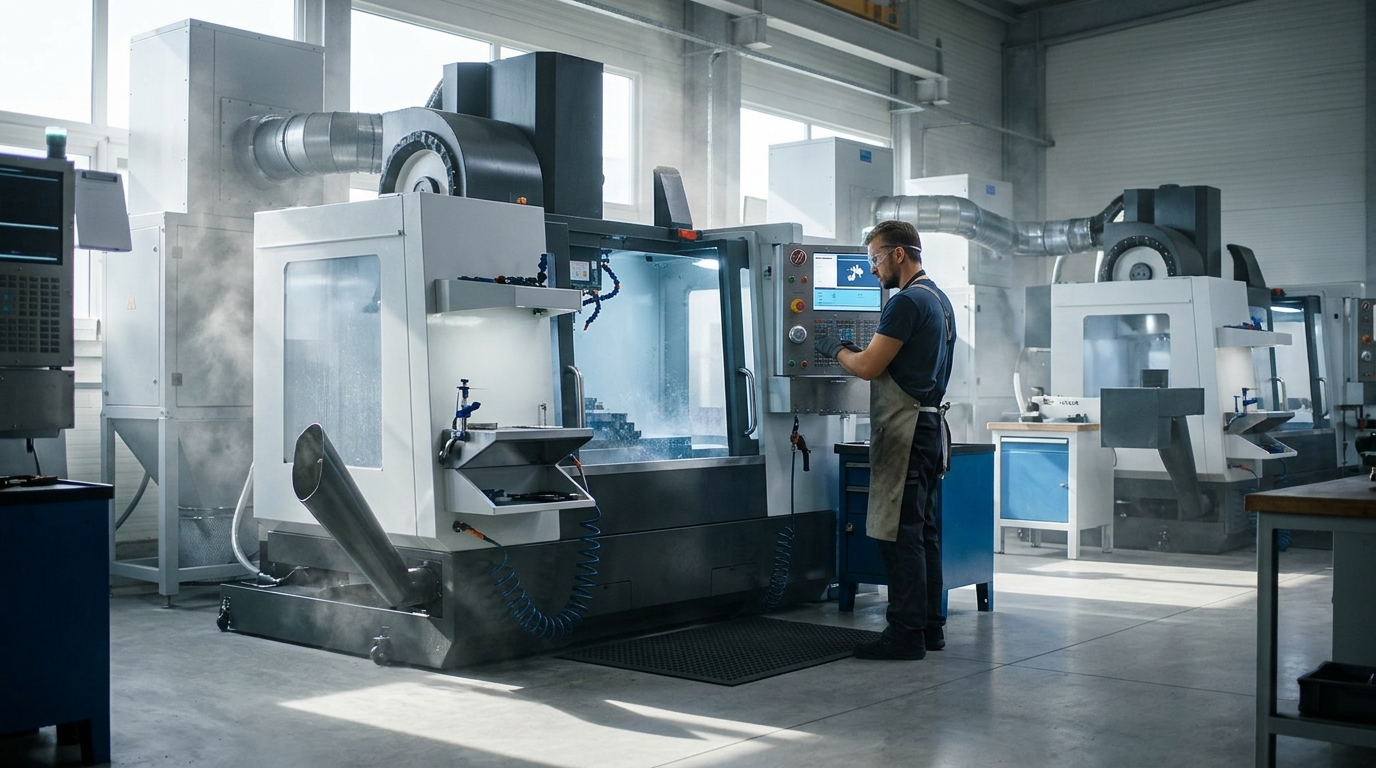
Choosing the right dust collection system for your workshop requires matching the specific type of airborne contaminant to the correct filtration technology. For metalworking and machining environments, this means prioritizing mist and fume capture over general dust collection. Aeroex specializes in industrial air filtration solutions designed to handle oil mist, coolant mist, and high-speed machining smoke at the source, ensuring a safer and cleaner workspace for your team.
Understanding the Difference Between Dust and Mist
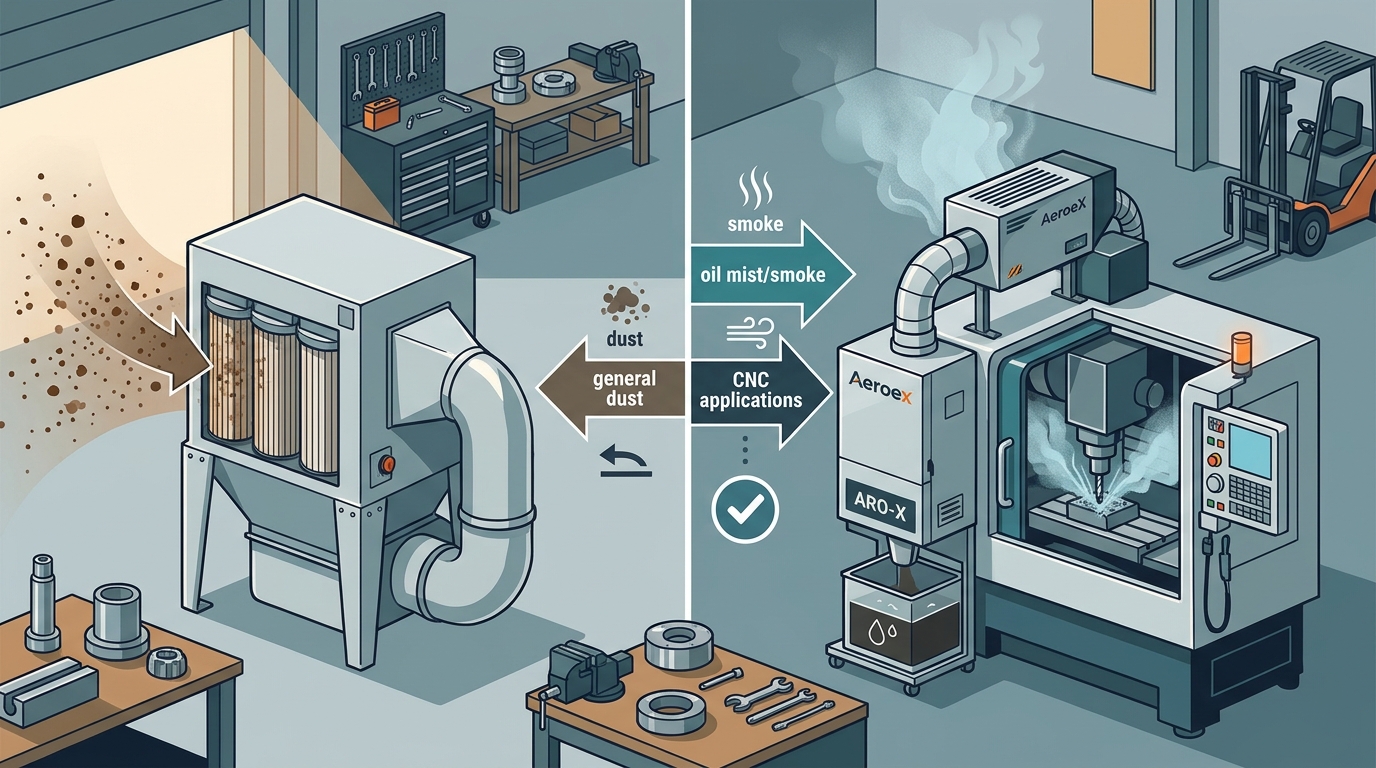
Many workshop owners confuse general dust with process-generated mist, leading to the selection of ineffective equipment. Dust is typically dry particulate matter, such as wood shavings or metal chips, which requires high-volume airflow and robust mechanical separation. Mist, however, is a liquid aerosol suspended in the air, generated by the atomization of coolants and oils during machining. Industrial mist collection is the process of capturing and separating liquid aerosols from the air stream to prevent them from settling on equipment or being inhaled by workers.
Using a standard dry dust collector for wet machining operations can lead to clogged filters and reduced airflow. Conversely, using a mist collector for dry grinding may not provide the necessary static pressure for high-volume particulate removal. Aeroex focuses on the latter, providing systems specifically engineered for the unique challenges of metalworking fluids and process vapors.
Identifying Your Primary Airborne Contaminants
The first step in selecting the right system is identifying what your machines actually produce. High-speed CNC milling and turning operations generate significant amounts of oil mist and coolant mist. These fine droplets can become airborne and circulate throughout the facility if not captured at the source. Source capture is the strategy of removing contaminants directly at the point of generation, rather than relying on room-level ventilation.
For shops running lathes, mills, or grinders, the primary concern is often the accumulation of mist on tools, surfaces, and operator clothing. This not only creates a slippery and unsafe environment but also degrades the precision of sensitive machinery. By focusing on the specific fluid chemistry, whether it is straight oil, soluble emulsion, or synthetic coolant, you can determine the appropriate filtration media required for effective capture.
Direct-Mount Solutions for Compact Layouts
In many modern machine shops, floor space is at a premium. Large, centralized ductwork systems can be difficult to install in compact layouts. This is where direct-mount mist collectors become a strong fit. These units are designed to attach directly to the machine enclosure, capturing contaminants as they are released. A direct-mount mist collector is a compact filtration unit installed on or adjacent to a specific machine to capture process-generated aerosols at the source.
Aeroex offers the Mist-Fit series, which is engineered for direct machine mounting. This approach reduces the need for extensive ductwork and allows for easy installation on individual CNC machines. It is particularly effective for shops with limited floor space or those looking to upgrade air quality on a per-machine basis without disrupting the entire facility layout. The compact design ensures that the filtration process happens close to the point of generation, maximizing efficiency.
Engineered Systems for Complex Applications
Not all workshops have simple, single-machine setups. Facilities with multiple high-output machines or unique process requirements may need a more robust solution. For these scenarios, a modular or engineered system is often the recommended approach. An engineered air filtration system is a custom-configured solution designed to handle high airflow demands and complex contaminant profiles across multiple workstations.
The ARO-X platform from Aeroex is designed for these higher-demand applications. It offers scalable filtration capabilities that can be tailored to specific airflow and static pressure requirements. This is ideal for shops dealing with a mix of oil mist, smoke, and volatile organic compounds (VOCs). By working with an engineering team, you can ensure that the system is sized correctly for your specific operating conditions, providing consistent performance across the entire production line.
Material Selection for Corrosive Environments
The environment in which your system operates also dictates the appropriate construction materials. In food and beverage manufacturing, chemical processing, or any facility with frequent washdowns, standard steel may not be sufficient. Stainless steel construction is a material choice used in filtration systems to provide resistance to corrosion, moisture, and chemical exposure in demanding industrial environments.
When your workshop involves humid conditions or corrosive fluids, selecting a system with stainless steel components ensures longevity and ease of cleaning. Aeroex provides options suitable for these sanitary and corrosive environments, ensuring that the filtration system remains durable and effective over time. This is a critical consideration for maintaining a clean and compliant workspace in specialized manufacturing sectors.
Key Takeaways
- Identify whether your primary contaminant is dry dust or liquid mist, as they require different filtration technologies.
- Source capture at the machine is more effective than room-level ventilation for controlling machining mist.
- Direct-mount collectors like the Mist-Fit are ideal for compact layouts and individual machine upgrades.
- Engineered systems like the ARO-X are recommended for multi-machine setups with high airflow demands.
- Choose stainless steel construction for environments involving washdowns, humidity, or corrosive chemicals.
- Consult with an expert to match your specific fluid chemistry and machine configuration to the right system.
Frequently Asked Questions
Can a mist collector be used for dry dust collection?
Mist collectors are optimized for liquid aerosols. While they can capture some dry particulate, they are not designed for high-volume dry dust collection, which typically requires different mechanical separation methods.
What is the difference between oil mist and coolant mist?
Oil mist is generated from straight oil or soluble oil emulsions, while coolant mist comes from synthetic or semi-synthetic coolants. Both are liquid aerosols, but their chemical properties may influence the choice of filtration media.
How do I determine the right airflow for my system?
Airflow requirements depend on the machine type, the volume of fluid used, and the enclosure design. An engineering review of your specific setup is the most reliable way to determine the correct CFM rating.
Are direct-mount collectors difficult to install?
Direct-mount collectors are designed for easy installation. They typically attach to the machine enclosure with minimal ductwork, making them a straightforward upgrade for existing equipment.
Do I need a stainless steel system for my workshop?
Stainless steel is recommended for environments with frequent washdowns, high humidity, or corrosive chemicals. For standard dry or wet machining without washdowns, standard construction may be sufficient.
Next Steps for Your Workshop
Selecting the right air filtration system is a critical investment in your facility's safety and efficiency. By understanding the specific contaminants your machines produce and matching them to the appropriate technology, you can significantly improve your workplace air quality. Aeroex is committed to helping you find the right fit for your unique operational needs. To discuss your specific application, for a tailored recommendation.