
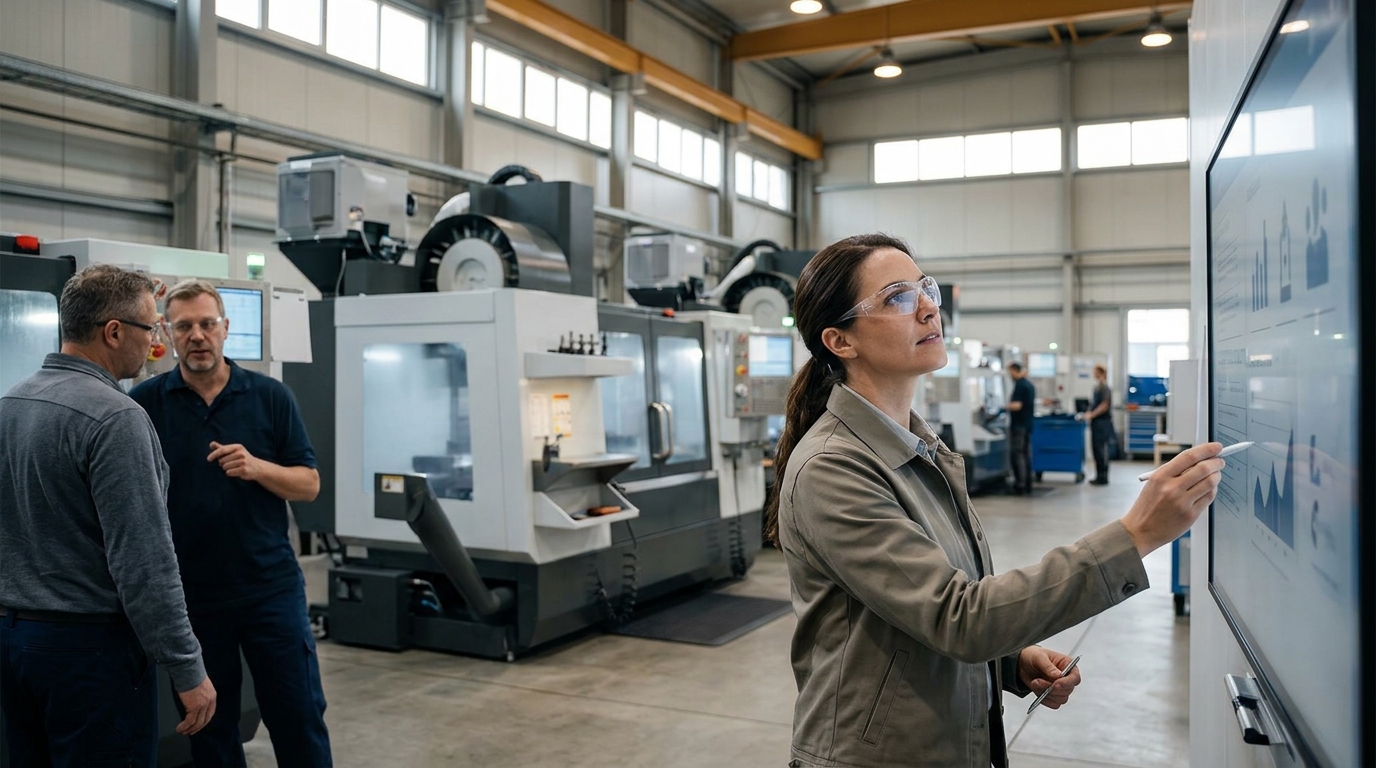
Industrial air pollution remains a critical challenge for manufacturing facilities, with studies indicating that effective mist collection can reduce airborne particulate matter by up to 99.9 percent. According to the Environmental Protection Agency, proper air filtration systems are essential for maintaining workplace safety and regulatory compliance in heavy industry sectors. Selecting the right mist collector is not merely a maintenance decision but a strategic investment in operational continuity and employee health. This guide outlines the critical technical and operational factors you must evaluate to ensure your facility meets the highest standards of air quality management. (Contact Us)
Understanding Mist Collector Types
Mist collectors are specialized air filtration devices designed to remove oil, water, and coolant mists from the air in industrial environments. These systems are critical for preventing respiratory issues among workers and protecting sensitive machinery from corrosion. AeroEx provides a range of solutions tailored to specific industrial needs, ensuring that each facility receives a customized approach to air quality management.
There are three primary types of mist collectors commonly used in industry: centrifugal, cartridge, and wet scrubber systems. Each type serves distinct operational requirements and offers unique advantages depending on the nature of the contaminants and the volume of air to be processed.
Centrifugal Mist Collectors
A centrifugal mist collector uses a high-speed rotating fan to throw mist particles against a collection surface. The particles coalesce into larger droplets that fall into a collection pan. This type is highly effective for large droplet sizes and is known for its low maintenance requirements. According to industry data, centrifugal systems can operate for thousands of hours before requiring filter replacement, making them a cost-effective choice for heavy-duty applications. (About)
Cartridge Mist Collectors
A cartridge mist collector utilizes pleated filter media to capture fine particulates. These systems are ideal for applications requiring high filtration efficiency, such as CNC machining and grinding operations. The pleated design increases the surface area of the filter, allowing for longer service life and consistent airflow. Data shows that cartridge systems can achieve filtration efficiencies of 99.97 percent for particles as small as 0.3 microns.
Wet Scrubber Systems
A wet scrubber system uses a liquid medium, typically water, to capture contaminants from the air stream. These systems are particularly effective for removing fine mists and soluble gases. Wet scrubbers are often chosen for environments where fire hazards are a concern, as they eliminate the risk of combustible dust accumulation. According to safety reports, wet scrubbers significantly reduce the risk of industrial fires associated with oil mist accumulation.
Evaluating Airflow and Capture Efficiency
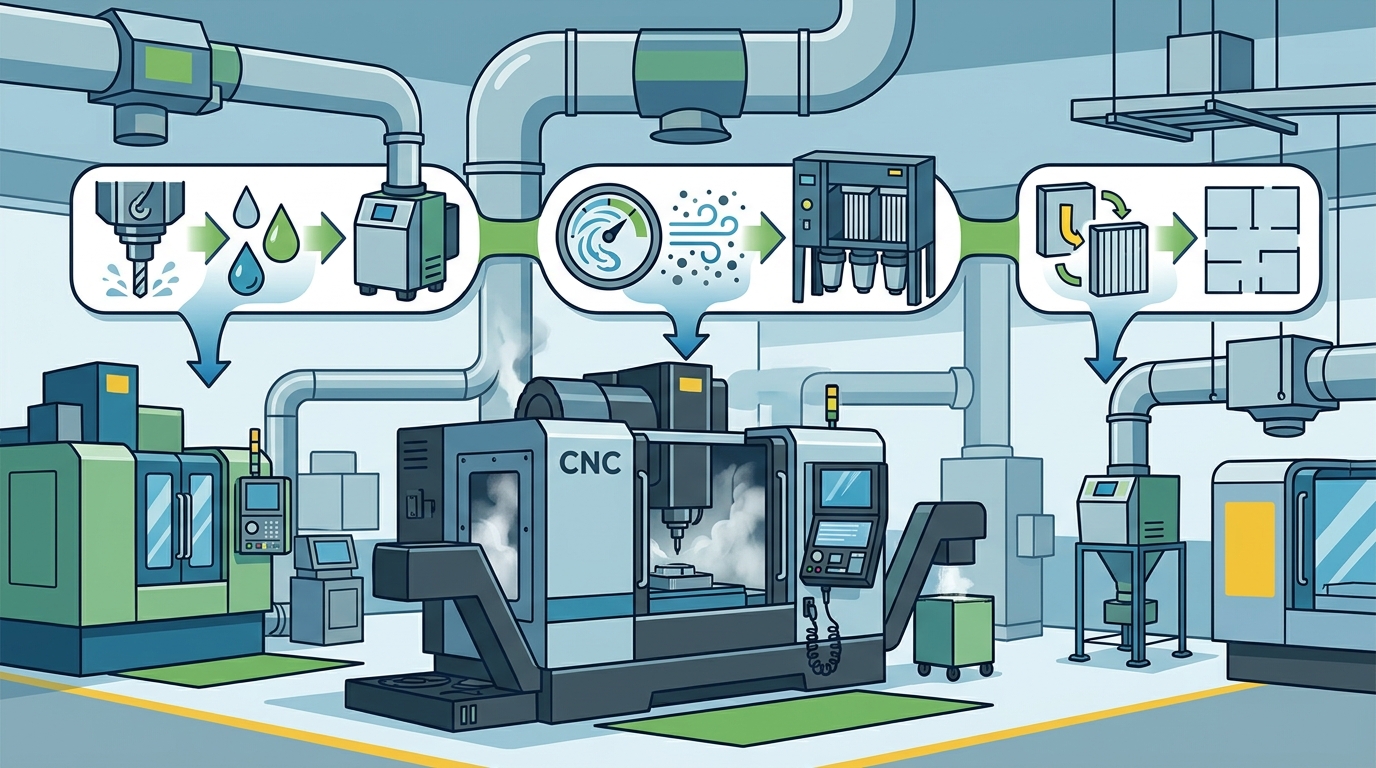
The effectiveness of a mist collector is largely determined by its airflow capacity, measured in cubic feet per minute (CFM). Selecting a system with insufficient airflow will result in poor capture efficiency, allowing contaminants to escape into the workspace. Conversely, an oversized system may lead to unnecessary energy consumption and higher operational costs.
When evaluating airflow capacity, consider the volume of the workspace and the number of contamination sources. AeroEx engineers recommend conducting a thorough site assessment to determine the precise CFM requirements for your facility. This ensures that the selected system can effectively capture and remove contaminants without overworking the motor.
Capture efficiency is another critical factor. This refers to the percentage of contaminants that the system successfully removes from the air stream. High-efficiency systems are essential for maintaining compliance with occupational safety standards. According to the Occupational Safety and Health Administration, maintaining high capture efficiency is vital for reducing worker exposure to hazardous airborne substances.
Filter Media and Filtration Stages
The choice of filter media directly impacts the longevity and performance of the mist collector. Different types of filter media are designed to handle specific contaminants, such as oil, water, or coolant mists. Understanding the composition of the mist in your facility is essential for selecting the appropriate filter.
Coalescing Filters
Coalescing filters are designed to capture fine mist particles by forcing the air through a dense media. The particles adhere to the filter fibers and coalesce into larger droplets, which then drain away. This type of filter is highly effective for oil mist applications. Data indicates that coalescing filters can extend the life of downstream equipment by preventing oil buildup on machinery.
HEPA Filters
High-Efficiency Particulate Air (HEPA) filters are used in applications requiring the highest level of filtration. These filters can capture 99.97 percent of particles at 0.3 microns. HEPA filters are often used in conjunction with pre-filters to extend their service life. According to health studies, the use of HEPA filters significantly reduces the risk of respiratory diseases among industrial workers.
Disposable vs. Washable Filters
Facilities must decide between disposable and washable filter options. Disposable filters offer convenience and consistent performance but generate more waste. Washable filters are more environmentally friendly and cost-effective over time but require regular cleaning and maintenance. The choice depends on the facility's operational budget and environmental goals.
Energy Consumption and Operating Costs
Energy consumption is a significant component of the total cost of ownership for a mist collector. Systems with high airflow capacities and powerful motors will consume more electricity. However, energy-efficient designs can reduce operational costs without compromising performance.
When evaluating energy consumption, look for systems with variable frequency drives (VFDs). VFDs allow the motor speed to adjust based on the airflow demand, reducing energy usage during periods of low activity. According to energy efficiency reports, VFD-equipped systems can reduce energy consumption by up to 50 percent compared to constant-speed motors.
Operating costs also include filter replacement, maintenance, and disposal. Systems with longer filter life and easier maintenance access will have lower operating costs. AeroEx provides detailed cost analysis tools to help facilities estimate the total cost of ownership for different mist collector models.
Maintenance Requirements and Accessibility
Regular maintenance is essential for ensuring the longevity and performance of a mist collector. Systems that are difficult to access or require complex maintenance procedures will incur higher labor costs and downtime.
Look for systems with easy-access panels and modular components. These features simplify filter replacement and inspection tasks. According to maintenance best practices, facilities that prioritize easy access to system components report 30 percent less downtime due to maintenance issues.
Additionally, consider the availability of replacement parts and technical support. Systems from reputable manufacturers like AeroEx typically have a robust supply chain for parts and dedicated technical support teams. This ensures that any issues can be resolved quickly, minimizing operational disruption.
Comparing System Options
Selecting the right mist collector requires a careful comparison of available options. The following table summarizes the key features of different mist collector types to assist in your decision-making process.
| System Type | Best For | Filtration Efficiency | Maintenance Level | Energy Efficiency |
|---|---|---|---|---|
| Centrifugal | Large droplet mists | High | Low | Medium |
| Cartridge | Fine mist and particulates | Very High | Medium | High |
| Wet Scrubber | Fine mists and gases | High | High | Medium |
| Custom AeroEx Solutions | Specific industrial needs | Variable | Variable | Optimized |
Each system type has distinct advantages and limitations. Centrifugal systems are robust and require minimal maintenance, making them ideal for heavy industrial environments. Cartridge systems offer superior filtration for fine mists but require more frequent filter changes. Wet scrubbers are effective for hazardous materials but involve higher water usage and maintenance complexity. Custom solutions from AeroEx can be tailored to address unique operational challenges, ensuring optimal performance and compliance.
Key Takeaways
- Centrifugal collectors are best for large droplet mists and offer low maintenance requirements.
- Cartridge collectors provide high filtration efficiency for fine mists and particulates.
- Wet scrubbers are essential for removing fine mists and soluble gases in hazardous environments.
- Variable frequency drives can reduce energy consumption by up to 50 percent in mist collector systems.
- HEPA filters capture 99.97 percent of particles at 0.3 microns, ensuring high air quality.
- Easy-access designs reduce maintenance downtime and labor costs significantly.
- Custom solutions from AeroEx address specific industrial needs for optimal performance.
Frequently Asked Questions
What is the difference between a centrifugal and a cartridge mist collector?
A centrifugal mist collector uses a rotating fan to separate mist particles from the air stream, while a cartridge mist collector uses pleated filter media to capture particles. Centrifugal systems are better for large droplets, whereas cartridge systems are ideal for fine mists.
How often should mist collector filters be replaced?
Filter replacement frequency depends on the type of filter and the volume of contaminants. Coalescing filters may last for thousands of hours, while HEPA filters may require more frequent changes. Regular monitoring is essential to determine the optimal replacement schedule.
Can mist collectors help with regulatory compliance?
Yes, mist collectors are critical for maintaining compliance with occupational safety and environmental regulations. They reduce airborne contaminants, protecting workers and the environment. According to regulatory standards, proper air filtration is mandatory in many industrial settings.
What is the lifespan of a mist collector system?
The lifespan of a mist collector system varies based on usage and maintenance. With proper care, these systems can last for many years. Regular maintenance and timely filter replacements are key to extending the system's life.
How do I determine the correct CFM for my facility?
Determining the correct CFM requires a site assessment that considers workspace volume and contamination sources. AeroEx engineers can conduct this assessment to recommend the appropriate system size for your facility.
Are wet scrubbers more expensive to operate than other systems?
Wet scrubbers may have higher water usage and maintenance costs, but they are effective for hazardous materials. The total cost of ownership should be evaluated based on specific operational needs and environmental goals.
What maintenance is required for AeroEx mist collectors?
AeroEx mist collectors require regular filter inspections and replacements. The systems are designed for easy access, simplifying maintenance tasks. Detailed maintenance guides are provided with each system.
Contact Us for a Custom Solution
Selecting the right mist collector system is a critical decision that impacts your facility's safety, compliance, and operational efficiency. AeroEx offers expert guidance and customized solutions to meet your specific needs. Contact us today to schedule a consultation and discover how we can help you achieve superior air quality management.